
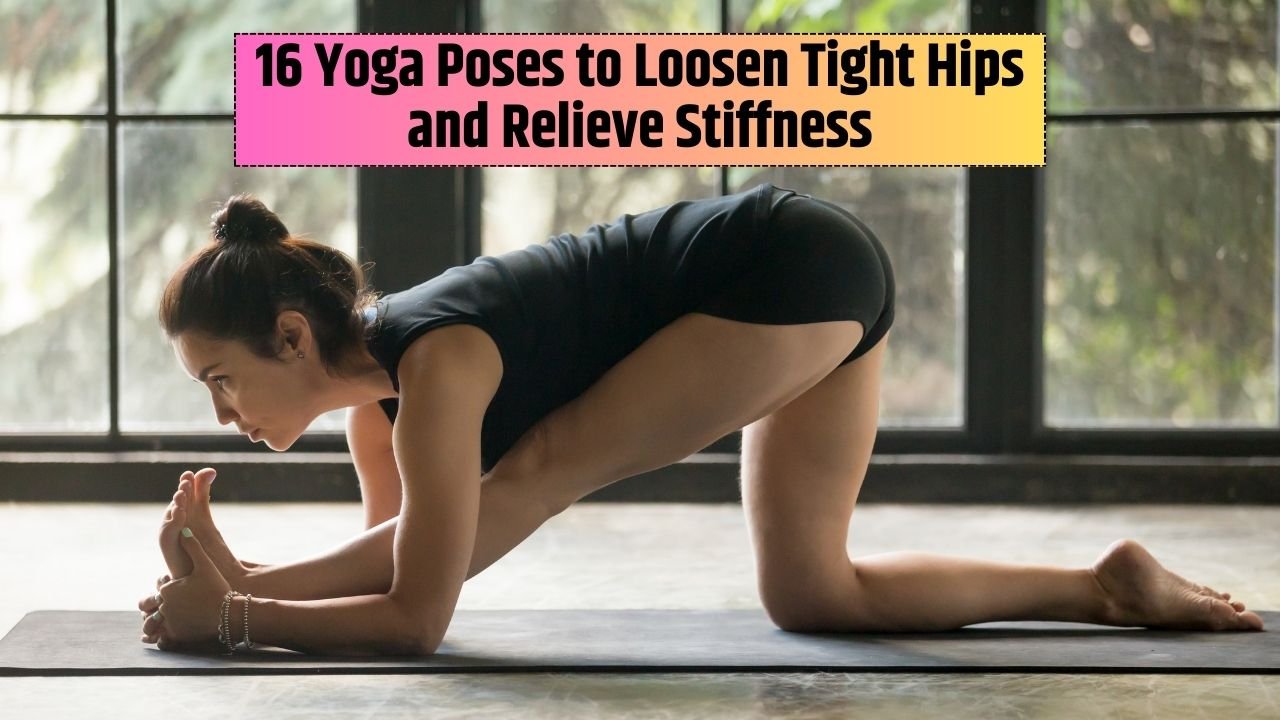

If your hips feel like they’re made of cement, you’re not alone. Modern life defined by desk jobs, long commutes, endless screen time, and minimal movement—has turned tight hips into a near-universal complaint. The discomfort creeps in slowly: maybe your lower back starts acting up, your knees ache after walking, or you can’t sit cross-legged without wincing. At the root of it all? Those tight, neglected hip muscles crying out for some TLC.
The good news? You don’t need a gym membership, fancy equipment, or even a full hour to fix it. Just your mat, your breath, and a few targeted yoga poses. These 16 postures are your go-to toolkit—designed to loosen tight hips, ease stiffness, and help your body feel more mobile and balanced.
Let’s dive into the hip zone.
Why Tight Hips Are a Bigger Deal Than You Think
The hips are like the body’s central junction. Everything passes through them—walking, standing, sitting, even your posture. When they get tight, it doesn’t just affect the hips. It puts a strain on the lower back, messes with knee alignment, and throws off your entire movement pattern.
Here’s what regular hip-opening yoga can help with:
| Benefit | Why It Matters |
|---|---|
| Increases flexibility | Frees up movement in daily activities |
| Relieves lower back pain | Less pressure on the spine from tight hip flexors |
| Improves posture | Aligns the pelvis and supports upright sitting/standing |
| Reduces stress | Many hip openers activate the parasympathetic nervous system |
| Supports joint health | Encourages circulation and synovial fluid production |
Alright, mat ready? Let’s get into the 16 yoga poses that’ll help unlock your hips—one breath at a time.
1. Mountain Pose (Tadasana)
Why it helps: Think of this as your posture baseline. Standing tall with awareness helps realign your pelvis and re-engage the muscles around your hips.
Quick tip: Slightly engage your thighs and glutes to feel the hip connection.
2. Chair Pose (Utkatasana)
What it does: Activates hip flexors and glutes while gently working your range of motion.
Pro tip: Keep your weight in your heels, not your knees.
3. Garland Pose (Malasana)
How it works: This deep squat naturally opens the hips and stretches the lower back. Perfect after sitting all day.
Modification: Use a block under your seat if your heels don’t reach the floor.
4. Bound Angle Pose (Baddha Konasana)
Why it matters: Opens the inner thighs and hips gently while promoting calmness through deep breathing.
Extra tip: Don’t force the knees down—gravity will do the work over time.
5. Seated Forward Bend (Paschimottanasana)
Surprise benefit: While it targets the hamstrings, this pose also helps release tightness in the hips and spine when approached with softness.
6. Wide-Legged Forward Bend (Prasarita Padottanasana)
Why it works: Combines hamstring lengthening with inner thigh and hip release.
Variation: You can place hands on blocks if you can’t reach the floor comfortably.
7. Low Lunge (Anjaneyasana)
Best for: Desk workers. This pose directly targets the hip flexors that get shortened from sitting too much.
Support idea: Use a blanket under the back knee to avoid strain.
8. Pigeon Pose (Eka Pada Rajakapotasana)
Deep release: Possibly the most popular hip opener out there—and for good reason. This gets deep into the glutes and hip rotators.
Caution: Go slow and use props if the pose feels too intense.
9. Figure Four Pose (Reclined or Standing)
Everyday friendly: This stretch hits the outer hips and piriformis muscle—a common source of sciatic pain.
To do it: Lying on your back, cross one ankle over the opposite thigh and gently pull the lower leg in.
10. Frog Pose (Mandukasana)
Advanced territory: A deep groin and hip opener. Ease into it—don’t rush.
Tip: Rest on your forearms and use cushions under knees for support.
11. Happy Baby (Ananda Balasana)
Why it helps: This pose decompresses the hips and soothes the nervous system at the same time.
Cue to remember: Keep your sacrum grounded and breathe deeply.
12. Bridge Pose (Setu Bandhasana)
Dual action: Opens hip flexors while strengthening the glutes and lower back.
Variation: Use a yoga block under your sacrum for a restorative version.
13. Reclined Bound Angle (Supta Baddha Konasana)
Deep relaxation: A favorite in restorative yoga, this posture passively opens the hips while calming your entire system.
Optional: Place cushions under each knee for extra comfort.
14. Cat-Cow Pose (Marjaryasana–Bitilasana)
Spinal flow: While primarily a spine mobilizer, Cat-Cow also helps warm up the hips with subtle pelvic tilts.
Extra cue: As you arch into Cow, try engaging your glutes to deepen the stretch.
15. Warrior II (Virabhadrasana II)
Standing power: This strong pose stretches and strengthens the hips simultaneously—perfect for building joint support.
Alignment key: Keep the front knee stacked over the ankle and press into the outer edge of the back foot.
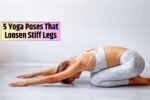
16. Wide-Legged Child’s Pose (Balasana, variation)
Soothing stretch: With knees apart, this version of Child’s Pose offers a calming hip opener that’s great at the end of a long day.
Bonus tip: Extend the arms forward to stretch the shoulders too.
Tips for Safe Hip Opening
- Warm up before going into deep hip stretches
- Use props generously—there’s no medal for suffering
- Breathe slowly to signal safety to your nervous system
- Move mindfully—don’t force your body into a shape it’s not ready for
- Be consistent—hip flexibility builds over time, not overnight
The hips are emotional and physical storage units. They carry stress, old tension, and the burden of being stationary for far too long. But the beauty of yoga is—it gives you a way out. A way back into your body. A way to move through the world with less resistance and more ease.
Start with just a few of these poses. Add more as you go. And above all, listen to your body. Your hips might protest at first, but over time, they’ll soften. They’ll open. And they’ll thank you for showing up.
FAQs
Aim for 3–5 times a week. Daily practice brings faster results, even if it’s just 10 minutes.
Yes tight hip flexors can pull on the lower spine, leading to discomfort or even chronic back issues.
Absolutely. Start where you are, use props, and don’t compare yourself. Flexibility comes with time.
Yes, though deeper stretches like Frog Pose or Pigeon should be done mindfully and modified if needed.
Evening is ideal for most people, as your body is warmer and more receptive after a day of movement.
