
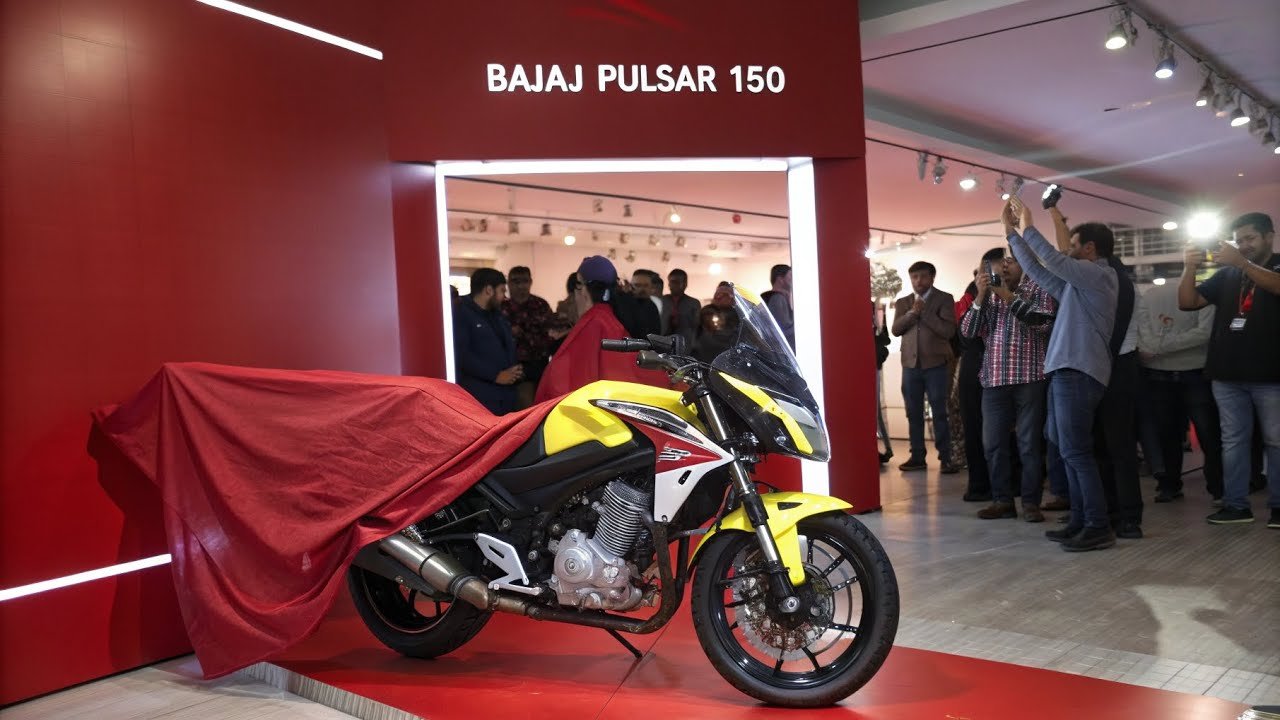

The Bajaj Pulsar 150 a name that’s practically part of India’s biking culture is finally getting a visual refresh for 2026. No radical reinventions here, but the tweaks are clear enough: fresh body graphics, LED lighting, and possibly a more modern instrument cluster. And yes, it’s still got the same bulletproof engine that’s made it a commuter favorite for two decades.
Let’s take a closer look at what’s changing and what’s staying put.
Design Refresh: Subtle But Noticeable
In a market where design plays a make-or-break role, Bajaj has played it smart with the Pulsar 150’s mid-cycle update. There’s no wild redesign, but the new decals and body graphics inject a much-needed dose of energy into the bike’s street presence. The cleaner, sharper look doesn’t just cater to the younger crowd—it also helps the Pulsar hold its own next to newer rivals like the TVS Apache 160 and Honda Unicorn.
LED headlight and LED indicators make their debut—finally. These aren’t just aesthetic upgrades; they also enhance visibility, especially in urban traffic and during night rides. Expect a crisper beam spread and better side visibility compared to the halogen units of the outgoing version.
Visual Changes You Can Expect
| Feature | 2026 Bajaj Pulsar 150 |
|---|---|
| Body Graphics | New decals & colors |
| Headlight | LED (replacing halogen) |
| Turn Indicators | LED units |
| Instrument Console | Likely revised display |
| Exhaust Styling | Minor tweaks possible |
Engine & Mechanics: If It Ain’t Broke…
Under the tank, nothing’s changed—and that’s not necessarily a bad thing. The 2026 Pulsar 150 sticks with its 149.5cc single-cylinder, air-cooled engine that puts out 13.8 bhp at 8,500 rpm and 13.25 Nm of torque at 6,500 rpm. It’s a proven motor, known for its linear power delivery, decent low-end torque, and everyday rideability.

While newer rivals offer more performance or sharper handling, the Pulsar remains a solid all-rounder. It still uses the same 5-speed gearbox, wet clutch, and chain drive, all tuned for smooth power transfer and longevity.
Bajaj Pulsar 150 Engine Specs
| Specification | Detail |
|---|---|
| Engine Capacity | 149.5 cc |
| Cooling | Air-cooled |
| Max Power | 13.8 bhp @ 8,500 rpm |
| Max Torque | 13.25 Nm @ 6,500 rpm |
| Transmission | 5-speed manual |
| Final Drive | Chain |
| Fuel System | Carburetor / FI (varies) |
No fuel efficiency figures were revealed with this update, but past models averaged 45–50 km/l under mixed riding conditions.
Chassis, Suspension & Braking
Mechanically, it’s the same familiar setup, which continues to balance comfort and handling. The telescopic front fork and twin rear gas-filled shock absorbers do a decent job of soaking up rough roads, potholes, and speed breakers—typical of what Indian city streets throw your way.
Braking remains unchanged, with a 260 mm front disc (with twin-piston calipers) and a 130 mm rear drum. While some competitors now offer rear disc brakes as standard, the Pulsar sticks to its roots in cost-effectiveness.

The bike also gets 17-inch alloy wheels with tubeless tyres—80/100 at the front and 100/90 at the rear.
Brakes, Wheels & Suspension
| Component | Specification |
|---|---|
| Front Brake | 260 mm Disc with 2-piston caliper |
| Rear Brake | 130 mm Drum |
| ABS | Single-channel |
| Front Suspension | 31 mm Telescopic Fork |
| Rear Suspension | Twin gas-charged shocks with preload |
| Tyres (Front/Rear) | 80/100 – 17 / 100/90 – 17 |
| Wheels | Alloy, 17-inch |
Dimensions, Ergonomics & Weight
For riders who want a well-balanced commuter that doesn’t feel too tall or heavy, the Pulsar 150 remains a sweet spot. It maintains a seat height of 785 mm, which is accessible for shorter riders, and a kerb weight of 148 kg, which gives it good road grip without feeling unwieldy in traffic.
With a wheelbase of 1,320 mm, the bike is stable at highway speeds but still nimble enough for city maneuvering. The 15-litre fuel tank is generous, especially in a segment where 10–12 litres is the norm.
Bajaj Pulsar 150 Dimensions
| Parameter | Value |
|---|---|
| Length | 2,055 mm |
| Width | 765 mm |
| Height | 1,060 mm |
| Wheelbase | 1,320 mm |
| Seat Height | 785 mm |
| Ground Clearance | 165 mm |
| Kerb Weight | 148 kg |
| Fuel Tank Capacity | 15 litres |
Price & Expected Launch Details
The current-gen Pulsar 150 sits in the Rs. 1.05 – 1.11 lakh (ex-showroom) range, depending on whether you pick the single or dual-disc variant. Bajaj hasn’t hinted at a price hike yet, but given the added LED lighting and cosmetic upgrades, a modest increase of Rs. 2,000–4,000 wouldn’t be surprising when the 2026 model officially hits showrooms.

With Rajiv Bajaj confirming multiple launches in 2026 as part of the Pulsar’s 25th anniversary, this 150 update is likely just the start. Expect the updated bike to hit dealerships sometime in Q1 2026.
Verdict: Still Relevant in 2026?
The Pulsar 150 may not lead the segment in tech or performance anymore, but it remains one of the most reliable and cost-effective options in its class. For everyday use—office commutes, college runs, and weekend rides—it offers just enough of everything. And now, with sharper looks and LED lighting, it feels more in step with modern expectations.
So if you’re shopping for a practical, fuel-efficient bike with just a hint of style, this refreshed Pulsar 150 will still be worth your shortlist.
FAQs
It’s a facelift. The 2026 version includes visual upgrades like new graphics and LED lights but no mechanical changes.

No. The bike retains the same 149.5 cc air-cooled engine with 13.8 bhp and 13.25 Nm torque.
A minor increase is likely due to new lighting and cosmetic tweaks, but it’s expected to stay under Rs. 1.15 lakh (ex-showroom).
The 2026 model now features LED headlights and LED turn indicators for better visibility and modern styling.
While an exact date hasn’t been confirmed, the launch is expected in early 2026 as part of Bajaj’s 25th anniversary updates.
