
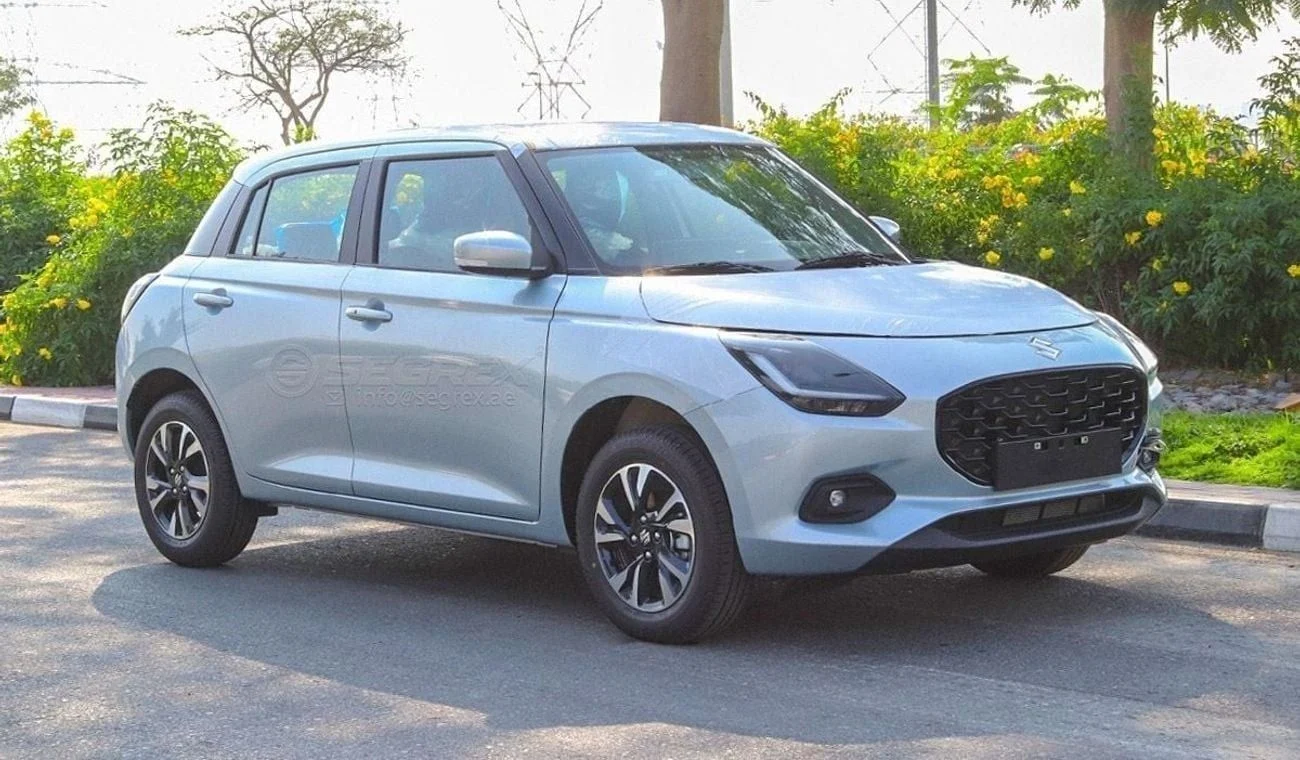

The Maruti Swift is back for 2026, and let’s just say Gone are the days when this hatchback was simply the go-to choice for college kids and budget-conscious families. This time, it’s showing up with bolder styling, sharper tech, and a sportier soul that actually feels tuned for fun, not just fuel savings. And in a market that’s flooded with crossovers and compact SUVs, the Swift still manages to stand out. How? By doubling down on what made it iconic in the first place—and adding just enough flair to make you do a double take.
Sporty Design That Actually Means Business
Let’s start with the obvious: the 2026 Swift looks fresher, meaner, and a lot more athletic. The new honeycomb grille design and sharper LED headlamps now sweep into the fenders, giving it a forward-leaning, aggressive vibe. There’s more muscle in the front bumper, and the DRLs look slick—think mini rally car for the city.
Along the sides, you’ve got tighter creases and subtle shoulder lines that catch the light in all the right ways. New alloy wheel designs (likely 15 or 16-inch, depending on trim) add just the right amount of visual punch. Even the rear gets an overhaul, with sleeker taillights and a bolder bumper that gives it a wider stance.
This isn’t just facelift territory—we’re talking proper evolution here.
Under the Hood
Maruti hasn’t dropped the full spec sheet yet, but all signs point to a continuation of the 1.2L petrol motor—probably the refined Z-Series engine that’s been floating around in test mules. It’s expected to push out around 82–90 hp, which doesn’t sound like a lot on paper, but remember—the Swift weighs barely a ton. Add some revised gear ratios and a lighter body, and you’ve got a peppy drive that feels faster than it is.
There’s buzz about mild-hybrid tech being added to certain trims to boost mileage and low-end torque. Not a full EV or even a strong hybrid—but enough assistance to make start-stop traffic feel smoother and increase those km/l numbers in real-world driving.

| Variant Type | Engine | Transmission Options | Expected Mileage (km/l) |
|---|---|---|---|
| Petrol (Base) | 1.2L NA | 5-speed manual, AMT | 22–23 km/l |
| Petrol Mild-Hybrid | 1.2L with ISG | 5-speed manual | 25–26 km/l |
This car’s not about raw power. It’s about the way it makes you smile at a traffic light, darting between gaps, zipping through narrow lanes, and still sipping fuel like it’s 2012.
Inside the Cabin
Here’s where the 2026 Swift gets some serious street cred. Maruti’s finally listened to the gripes and upgraded the interior to feel less “budget box” and more “daily driver with flair.”
There’s a new floating infotainment screen—likely 9 inches on higher trims—with crisp graphics and better UI. It supports wireless Apple CarPlay and Android Auto now, a welcome upgrade. The driver’s display? Digital on top variants, with sharp animations and real-time fuel info that’s actually useful.
Material quality feels a notch better too. Expect dual-tone themes, contrast stitching, and textured surfaces that don’t feel like bargain-bin plastic. The steering wheel’s flat-bottomed (sporty touch), and the seats get improved bolstering.
Rear seat space remains Swift-ish—not massive, but adequate for two adults. Boot space hovers around 265 liters, unchanged, which is enough for a weekend getaway or your weekly market haul.

Driving Feel
This is where the Swift has always shined—and thankfully, 2026 is no different. Maruti’s kept the car’s nimbleness alive and dialed in some suspension tweaks to improve balance and cornering composure.
The steering is light but more responsive than before, and there’s better weight distribution across the chassis. No, it’s not going to pull Gs like a hot hatch, but for city corners and highway overtakes? It’s still one of the most fun-to-drive cars in its price range.
NVH (noise, vibration, harshness) levels are said to be improved too, which should make longer commutes more pleasant.
Safety
Let’s be honest—Maruti’s safety game hasn’t always matched its sales figures. But the 2026 Swift is trying to fix that. Base models will come with:
- Dual front airbags
- ABS with EBD
- Rear parking sensors
- Speed alerts and seatbelt reminders
But the higher trims? That’s where things get interesting. Rumors suggest the inclusion of:

- Hill hold assist
- ESC (Electronic Stability Control)
- Rear-view camera
- ISOFIX anchor points
- And maybe even six airbags on the top-end variant
Global NCAP’s new protocols are stricter now, so expect Maruti to push harder for a safer structure and better crash-test ratings.
Who Should Buy the Swift 2026?
If you’re a city dweller who values a small footprint, low running costs, and a little fun behind the wheel—the Swift’s still your best bet. It’s also great for:
- First-time buyers who want a car that feels sporty without the insurance nightmare
- College students or young professionals looking for style + efficiency
- Families needing a second car that’s easy to maintain and park
- Folks upgrading from older hatchbacks who still want a manual gearbox (they still exist!)
Plus, it holds its value well, and you won’t struggle to find a mechanic even in Tier-2 towns.
What About the Competition?
In India’s hatchback warzone, the Swift has always had to fight off rivals like the Hyundai Grand i10 Nios and Tata Tiago. Here’s how it stacks up:
| Car | Mileage (claimed) | Features | Safety Equipment | Vibe |
|---|---|---|---|---|
| Swift 2026 | 22–26 km/l | Strong tech suite | Expected 2–6 airbags | Sporty/Youthful |
| Grand i10 Nios | 20–24 km/l | Better cabin plushness | 2–6 airbags | Premium-lite |
| Tata Tiago | 19–23 km/l | Strong build | 4-star GNCAP rating | Safe & Solid |
Each has its strengths, but the Swift’s overall balance of fun, features, and fuel economy keeps it in the top spot.

The Maruti Swift 2026 isn’t reinventing the wheel but it doesn’t have to. It just sharpens everything that made the Swift iconic in the first place. More style. More tech. Still great to drive. And still easy on the wallet.
In a market increasingly obsessed with SUVs, it’s nice to see a humble hatchback hold its ground—with a cheeky grin and a rev-happy heart.
FAQs
It’s more than a facelift think of it as a major update with redesigned exteriors, new interiors, and under-the-hood improvements.
A CNG variant may launch later, but initial models are expected to be petrol-only with mild-hybrid assistance on select trims.
Pricing is likely to start around ₹6 lakh and go up to ₹9 lakh (ex-showroom), depending on variants and transmission.
Yes, thanks to its refined engine, stable ride quality, and improved NVH levels, it handles highways comfortably.
Unlikely. Maruti hasn’t traditionally added sunroofs in this segment, but it may surprise us with higher trims.
