
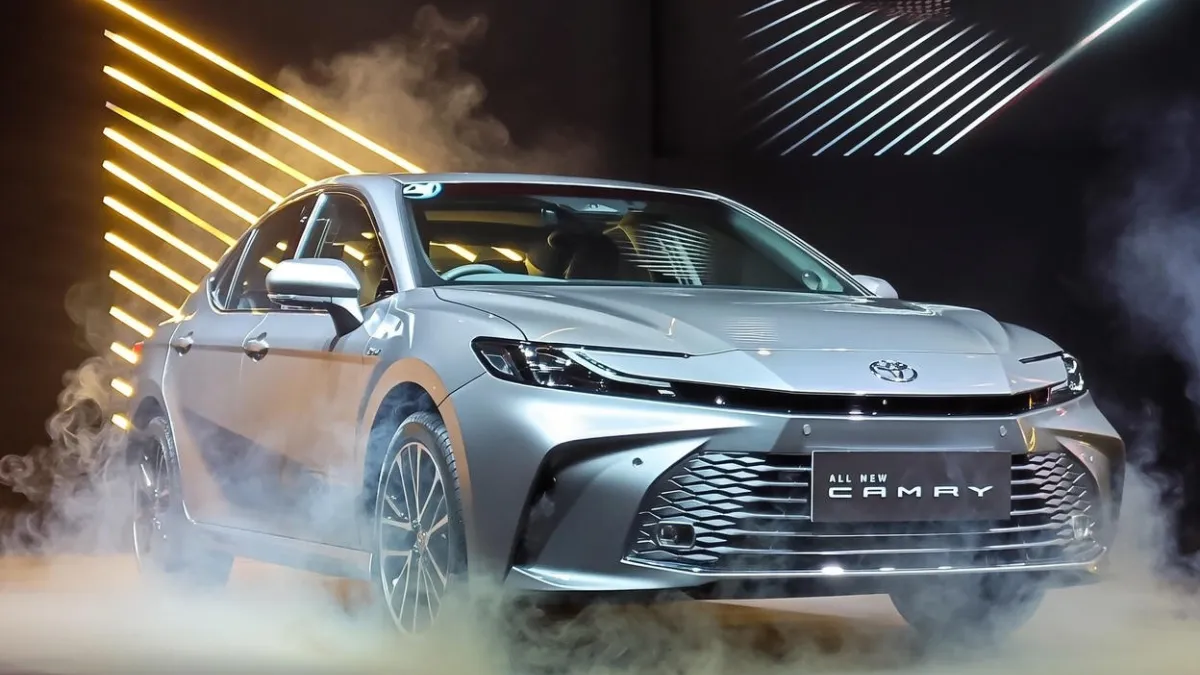

The 2026 Toyota Camry doesn’t just evolve it elevates. Toyota has reimagined its best-selling sedan with a sharper look, smarter tech, and real mechanical upgrades, proving once again that sedans can still command attention in a crossover-dominated world. This isn’t a subtle refresh—it’s a confident step into a new chapter, with just enough edge to surprise loyalists and new buyers alike.
Let’s break down how the latest Camry went from practical standby to premium contender.
A New Design With Real Presence
If previous Camrys were quietly confident, the 2026 model shows up like it knows it belongs in the spotlight. The new front fascia is lower, wider, and meaner, giving off serious Lexus vibes—especially in the sport trims. The grille stretches more horizontally now, with blacked-out mesh or metallic elements depending on the trim. Paired with angular LED headlights and sharper body sculpting, the Camry finally looks as athletic as it often drives.
The side profile remains clean and balanced, but subtle tweaks—a lower roofline taper, deeper character lines, and new wheel designs—give it a more dynamic stance. It’s a more youthful Camry without being juvenile.
Out back, redesigned LED taillights span across the rear, subtly mimicking the light bars seen on more expensive sedans. A tastefully integrated spoiler and dual-exhaust finishers (on sportier trims) complete the look.
It’s still a Camry, sure—but now it turns heads.
Interior
Slide into the 2026 Camry and the biggest upgrade is right in front of you: a crisp 12.3-inch digital instrument cluster. This isn’t a gimmicky screen for the sake of tech points—it’s sharp, fast, and highly customizable. Whether you want to see navigation, trip info, hybrid energy flow, or old-school gauges, it’s all just a few toggles away.

Next to it sits the redesigned infotainment screen, ranging from 8 to 12.3 inches depending on the trim. Gone is the dated dashboard integration—the new system feels purpose-built and is fully wireless for Apple CarPlay and Android Auto. Buttons haven’t been thrown out entirely either, so quick access to climate or volume doesn’t require digging through menus. It’s a good balance of tactile and touch.
Soft-touch materials are now standard, and mid- and top-tier trims step things up with synthetic leather or real leather upholstery, accented by brushed aluminum or open-pore wood depending on your flavor. Even the base trims feel upscale—something the old Camry didn’t always deliver.
Comfort and Space
Toyota hasn’t sacrificed the fundamentals. The Camry remains one of the most spacious sedans in the midsize segment. Rear legroom is generous, and headroom is solid despite the sleeker roofline.
Seat comfort has noticeably improved with better bolstering and lumbar support. Front passengers now get heated and ventilated seats in more trims, and rear seat heaters are available too—making this sedan surprisingly pampering.
All-Wheel Drive Returns, Smarter Than Before
In a move clearly aimed at buyers in the Midwest, Northeast, and mountain states, available all-wheel drive is back for 2026—but now it’s smarter. Toyota’s updated AWD system actively adjusts torque distribution based on conditions, sending power to the rear wheels only when needed.
The beauty? You still get excellent fuel economy, especially on the hybrid trims, where Toyota has optimized the system for minimal drag. AWD adds versatility without turning the Camry into a gas-guzzler or compromising ride quality.

Powertrain
Here’s where the Camry takes a bolder leap: every 2026 Camry is now hybrid-only in the U.S. market.
Toyota has ditched the old V6 and base four-cylinder in favor of an evolved fifth-gen hybrid powertrain, paired with a 2.5L Atkinson-cycle engine. Output is a respectable 225 horsepower for FWD models and 232 horsepower with AWD. But the bigger story? Fuel economy pushing into the 50+ MPG range, depending on trim.
For most drivers, this strikes the sweet spot: power when you need it, savings when you don’t. And if you’re worried about the feel of a CVT, Toyota has done some real tuning here—the throttle response is tighter, and transitions between gas and electric power are smoother than ever.
Ride, Handling and Quietness
Toyota has revised the chassis and suspension tuning to reduce body roll and increase comfort without making the Camry feel floaty. The result? A sedan that drives tighter in corners, stays planted on the highway, and still glides over potholes.
Steering feel is more natural, especially in SE and XSE trims. There’s decent feedback, and the electric assist has been tuned to offer variable weight based on speed.
Wind and road noise are also down, thanks to improved door seals and added insulation in the floor and wheel wells. This is a quieter, more composed Camry—one that feels $5K more expensive than it is.

Safety Tech
As expected, Toyota Safety Sense is standard across the board—and it’s more capable than ever:
| Safety Feature | Standard? |
|---|---|
| Pre-Collision w/ Pedestrian Detection | YES |
| Lane Departure Alert w/ Steering Assist | YES |
| Adaptive Cruise Control | YES |
| Lane Tracing Assist | YES |
| Road Sign Assist | YES |
| Blind Spot Monitor | YES (Most trims) |
What’s improved is how these systems behave. They’re less intrusive and more intuitive, especially adaptive cruise, which now responds more naturally to stop-and-go traffic. Lane tracing is smoother, and driver alerts are better timed. It’s no longer just safety—it’s confidence-building.
Tech Features Worth Noting
- Digital Key: Use your smartphone to lock, unlock, and start the car
- Connected Services: Remote start, diagnostics, and OTA updates
- 360-Degree Camera System: Available on top trims
- Premium JBL Audio System: Rich sound with 9+ speakers
- Head-Up Display: Available for the first time on more trims
Toyota has clearly positioned the Camry as a value-packed tech leader, not just a reliable A-to-B appliance.
Who Is It For?
The 2026 Camry straddles multiple lanes:
- Commuters will love the efficiency and comfort
- Families will appreciate the practicality and safety
- Younger buyers get the tech and sportier styling
- Snowbelt drivers finally have a reliable AWD sedan that’s not an SUV
In a world where everything is shifting to crossovers, the Camry is doubling down on what made it iconic while still managing to feel like something entirely new.
The 2026 Toyota Camry is no longer just a safe choice—it’s a smart one, and a surprisingly stylish one at that. With its bold design, available AWD, and efficient hybrid-only powertrains, Toyota has turned the Camry into a modern midsize sedan with real depth.

It still nails the basics: reliability, practicality, and comfort. But now it also delivers on design, tech, and driving refinement—proving that the best-selling sedan in America isn’t resting on its laurels. If you thought sedans were fading away, the new Camry is here to change your mind.
FAQs
Yes, Toyota has moved the entire Camry lineup to hybrid-only powertrains in the U.S. market.
Yes, AWD is available on most trims, offering better traction in poor weather.
EPA estimates are still being finalized, but expect up to 50+ MPG depending on trim and drivetrain.
LE, SE, XLE, XSE, and a sportier Nightshade trim all hybrid and with optional AWD.
Dimensions are similar, but the redesign improves aerodynamics, interior comfort, and visual appeal.
