
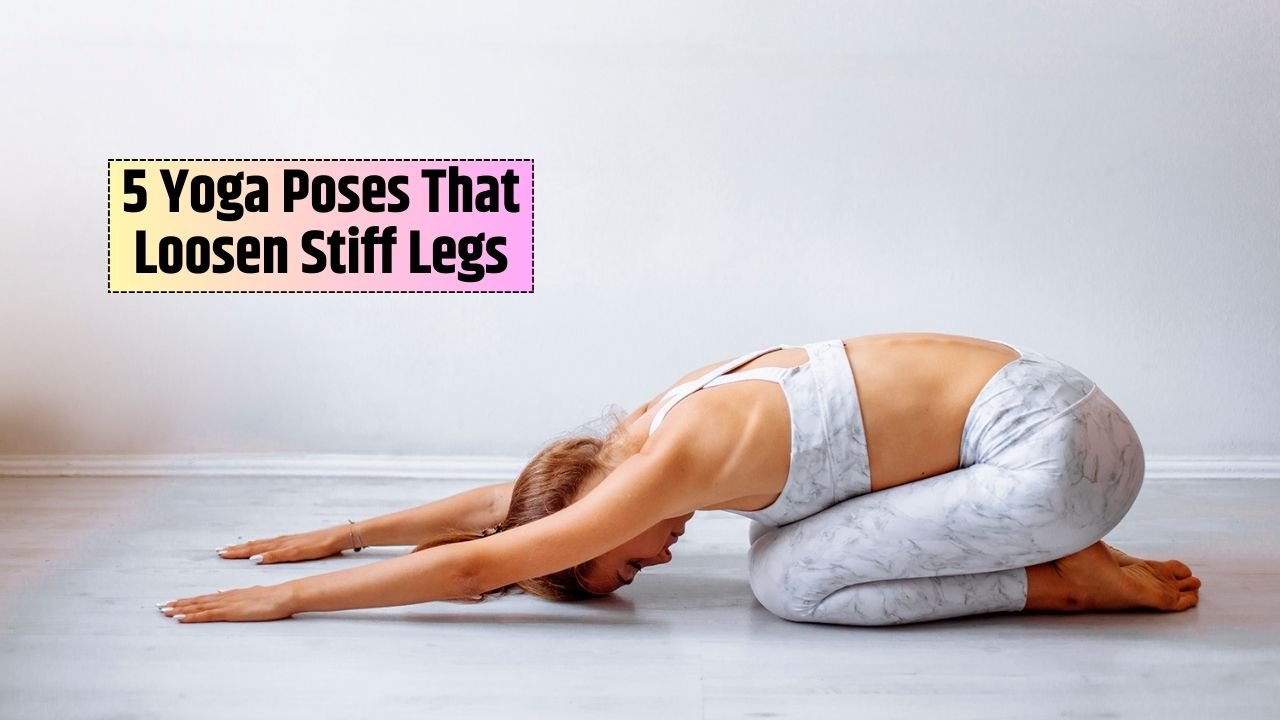

Stiff legs are one of those quiet annoyances that sneak into your day and stay there. Whether it’s the dull pull behind your knees after sitting too long or that tight snap in your thighs after climbing stairs, tight leg muscles can mess with everything from your posture to your stride. The worst part? You don’t have to be an athlete to deal with it. Long desk hours, dehydration, stress, or even just skipping a warm-up can leave your calves, hamstrings, quads, and hips begging for relief.
Luckily, you don’t need to push your body to extremes to feel better. Yoga offers a gentle reset—a way to reintroduce movement, breath, and stretch without aggravating your muscles. These five targeted yoga poses are beginner-friendly, safe, and surprisingly effective at loosening stiff legs and bringing back natural mobility.
Why Leg Stiffness Develops Over Time
Your legs are designed to move—and move often. But modern life? Not so much.
| Contributing Factor | What It Does |
|---|---|
| Sitting too long | Shortens hamstrings and hip flexors |
| Standing too long | Tightens calves, ankles, and low back |
| Repetitive workouts | Overworks specific muscle groups |
| Stress or anxiety | Triggers unconscious tension in hips and thighs |
| Dehydration | Reduces muscle elasticity and recovery |
When movement becomes limited, the brain starts to “forget” how to fully release the muscles. That’s where yoga comes in—offering slow, controlled motion that retrains both the body and the nervous system to let go of that tension.
How Yoga Helps Loosen Tight Leg Muscles
Yoga isn’t about touching your toes—it’s about building a relationship with your body. In the case of stiff legs, yoga offers these key benefits:
- Muscle release through breath: Deep breathing signals your body it’s safe to relax, helping tight muscles unclench.
- Improved circulation: Movement increases blood flow to your legs, delivering oxygen and nutrients for recovery.
- Slow, mindful stretching: Unlike bouncing or over-pulling, yoga encourages gradual lengthening that prevents strain.
- Rewiring tension patterns: Regular practice improves neuromuscular communication, so your body remembers how to move more freely.
1. Forward Fold (Uttanasana)
Stretches: Hamstrings, calves, spine
This simple pose is a go-to for a reason—it decompresses the entire backside of your body.
How to do it:
- Stand tall with feet hip-width apart
- Hinge at the hips, folding forward
- Let your head and arms hang heavy
- Slightly bend your knees if needed
Why it helps: Sitting all day shortens the back body. This pose gently lengthens the hamstrings and calves while reducing mental stress through inversion.
Pro Tip: Keep your knees soft, especially if your hamstrings are tight. The goal is release, not reaching the floor.
2. Low Lunge (Anjaneyasana)
Stretches: Hip flexors, quads, groin
This is the antidote to too much sitting.
How to do it:
- Step one foot forward, bend the front knee
- Lower your back knee to the ground
- Press into the front foot and lift through the chest
- Hold for 5–8 breaths, then switch sides
Why it helps: Low lunge targets the front of your hips and thighs—the muscles that get the tightest from modern desk life.
Modifications: Use yoga blocks or a cushion under the back knee for extra support.
3. Wide-Leg Standing Forward Bend (Prasarita Padottanasana)
Stretches: Inner thighs, hamstrings, calves
A deeper stretch that works multiple leg muscles at once.
How to do it:
- Stand with feet wide apart
- Hinge at the hips, fold forward with a long spine
- Let your hands rest on the floor or a block
- Relax your head and breathe slowly
Why it helps: This pose improves pelvic mobility and creates space in the inner thighs—an often-overlooked area for leg stiffness.
Pro Tip: If your hamstrings are tight, place hands on blocks to keep your spine elongated.
4. Reclined Hand-to-Big-Toe Pose (Supta Padangusthasana)
Stretches: Hamstrings, calves, lower back
This one’s a favorite for good reason—it’s accessible, effective, and completely supported.
How to do it:
- Lie flat on your back
- Extend one leg toward the ceiling, keeping the other bent or flat
- Loop a strap or towel around the lifted foot
- Gently pull the leg toward you without forcing
Why it helps: Great for end-of-day stiffness or post-workout release, this pose lets gravity assist the stretch while you stay relaxed.
Tip: Keep the lifted leg straight only if comfortable—bent knees are fine.
5. Garland Pose (Malasana)
Stretches: Ankles, calves, inner thighs, hips
The deep squat you didn’t know your body was craving.
How to do it:
- Stand with feet slightly wider than hip-width
- Squat down, bringing your hips toward the floor
- Keep heels down (use a rolled blanket if needed)
- Bring palms together at your heart, elbows gently pressing knees apart
Why it helps: Garland pose restores natural squat mobility—something we lose over time. It opens multiple areas of the lower body and strengthens the feet and ankles too.
Modifications: Tight hips or heels lifting? Place a folded blanket under your heels for support.
Tips for Practicing Safely with Tight Legs
- Don’t rush: Stiff legs need time to soften. Stay in poses longer rather than pushing deeper.
- Use props: Blankets, straps, or blocks make the practice more accessible and effective.
- Warm up first: A short walk or light movement helps prepare your body for deeper stretches.
- Breathe intentionally: Inhale to expand, exhale to release tension.
- Be consistent: 10–15 minutes a few times a week will show results faster than occasional deep stretching.
Stiff legs aren’t just uncomfortable—they affect how you stand, walk, and move through the world. Over time, that discomfort can lead to misalignment, fatigue, or even injury. But it’s not permanent. With gentle yoga and a consistent approach, your body can regain flexibility and ease.
These five yoga poses offer a simple, beginner-friendly way to loosen the legs, restore balance, and improve how your entire lower body feels—both on and off the mat. All it takes is a few minutes, a little patience, and your breath.
FAQs
Yes. With consistent practice, yoga improves flexibility, circulation, and muscle recovery.
Aim for 3–5 times a week, even for just 10–15 minutes.
Absolutely. Slightly bent knees protect the back and allow a deeper hamstring release.
Yes. Looser leg muscles improve stride, joint mobility, and reduce strain on knees and hips.
Not at all. These poses are beginner-friendly and can be adapted using props like straps or blocks.
