
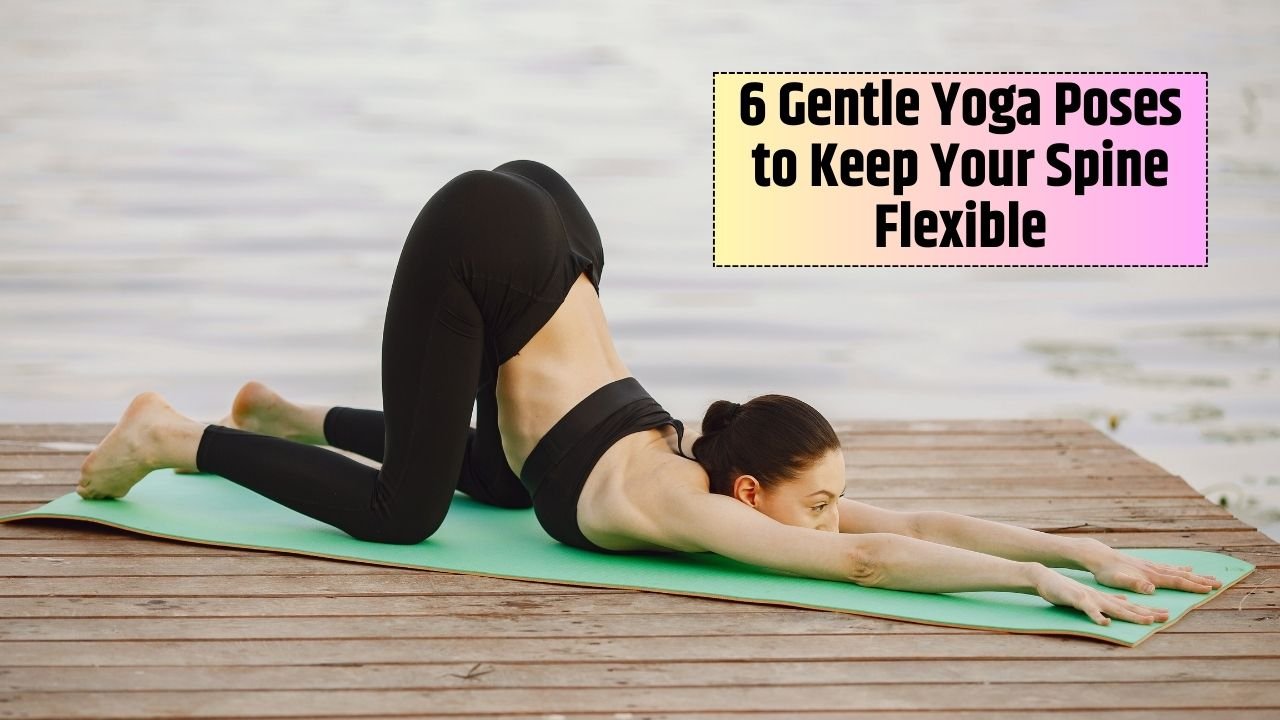

Most of us don’t think about our spine until it starts complaining. That dull ache after long hours at your desk, the stiffness when you bend over—it all points back to one thing: your spine’s asking for a little love. The good news? You don’t need a gym membership or fancy equipment to keep it happy. Yoga—gentle, mindful, and surprisingly powerful is one of the best ways to keep your back strong, flexible, and pain-free. Here are six yoga poses that can help you maintain a healthy spine without straining your body.
Cat-Cow Pose
If there’s one pose every desk worker should know, it’s Cat-Cow. It’s simple, feels incredible, and works like oil for a creaky spine.
Start in a tabletop position—hands under shoulders, knees under hips. As you inhale, arch your back, lift your chest, and tilt your tailbone up (that’s the Cow). Exhale, round your spine, tuck your chin, and draw your navel in (that’s the Cat). Move with your breath for ten to twelve rounds.
What makes this so powerful is how it wakes up every vertebra, improves circulation, and melts away stiffness from neck to tailbone. It’s like a morning stretch for your spine’s entire highway.
Seated Forward Fold
A seated forward fold, or Paschimottanasana, is less about touching your toes and more about letting go.
Sit tall with your legs stretched out in front. Inhale, lift your arms overhead to lengthen your spine, and as you exhale, hinge forward from your hips. Rest your hands where they land—on your legs, ankles, or feet. Let your head drop naturally.

The key here isn’t how far you bend, but how much you relax. This pose decompresses the lower back, stretches tight hamstrings, and soothes your nervous system—ideal after a long day of sitting.
Seated Spinal Twist
Twists are magic for your spine. They wring out tension and keep your back supple.
Sit with your legs extended or cross-legged. Place your right hand behind you and your left hand on your right knee. Inhale to sit taller; exhale and gently twist to the right. Stay for five breaths, then switch sides.
Each twist encourages fresh blood flow around the spinal discs, helping them stay hydrated and healthy. It’s like giving your spine a gentle “reset.”
Bridge Pose
The Bridge Pose strengthens your lower back, glutes, and hamstrings—all crucial for a stable spine.

Lie on your back with knees bent and feet hip-width apart. Keep your arms alongside your body. Inhale, press into your feet, and lift your hips. Don’t strain—just rise until you feel your chest open and your back muscles engage. Hold for five to seven breaths, then slowly lower down.
This pose helps correct slouched posture and builds endurance in the muscles that hold your spine upright.
Child’s Pose
Whenever your body feels tired or your back feels tight, Balasana—Child’s Pose—is your safe space.
Sit on your heels, fold forward, and rest your forehead on the mat. Stretch your arms forward or leave them beside you. Breathe deeply, letting your back rise and fall with each inhale. Stay here for up to two minutes.
Child’s Pose gently elongates the spine, relaxes the hips, and melts stress. Think of it as your spine’s “nap time.

Cobra Pose
Cobra Pose strengthens your spinal extensors—the muscles that help you stand tall—and opens up your chest and shoulders.
Lie face down with palms under your shoulders and elbows close to your ribs. On an inhale, gently lift your chest, using your back muscles more than your arms. Keep your neck long and shoulders relaxed. Hold for five breaths, then lower slowly.
It’s a subtle movement, but done right, it improves posture and boosts spinal flexibility over time.
How Yoga Transforms Spinal Health Over Time
What makes yoga stand out isn’t just flexibility—it’s balance. Each pose combines stretching, strengthening, and mindful breathing. Over time, your posture improves, stiffness fades, and you become more aware of how your body moves. Your spine learns to support you naturally, without the daily tug-of-war between tension and release.
Regular practice also improves core stability, which means less strain on your back during everyday movements—whether you’re picking up groceries or working at your laptop.

Safety Tips for a Happy Spine
- Move slowly and respect your body’s limits.
- Never force a stretch; pain is a sign to ease up.
- Use props like cushions, folded blankets, or yoga blocks for comfort.
- Practice on a non-slip mat in a quiet, safe space.
- Focus on consistency—five mindful minutes a day beats an hour once a week.
A healthy spine isn’t just about flexibility—it’s about awareness, strength, and daily care. Yoga teaches you to move with intention, breathe through discomfort, and listen when your body whispers (before it starts shouting). Even if you can’t spare an hour, a few mindful minutes each day can make your back feel lighter, your posture taller, and your movements more effortless.
FAQs
Yes, all six poses are beginner-friendly if done gently and with mindful breathing.
Even 10–15 minutes daily can improve flexibility and reduce back stiffness.
Morning is ideal to loosen up after sleep, but evening sessions help release daytime tension too.
Yes, but it’s best to consult a physiotherapist or doctor before starting if pain is persistent.
No, but blankets or cushions can make poses more comfortable, especially for beginners.
