
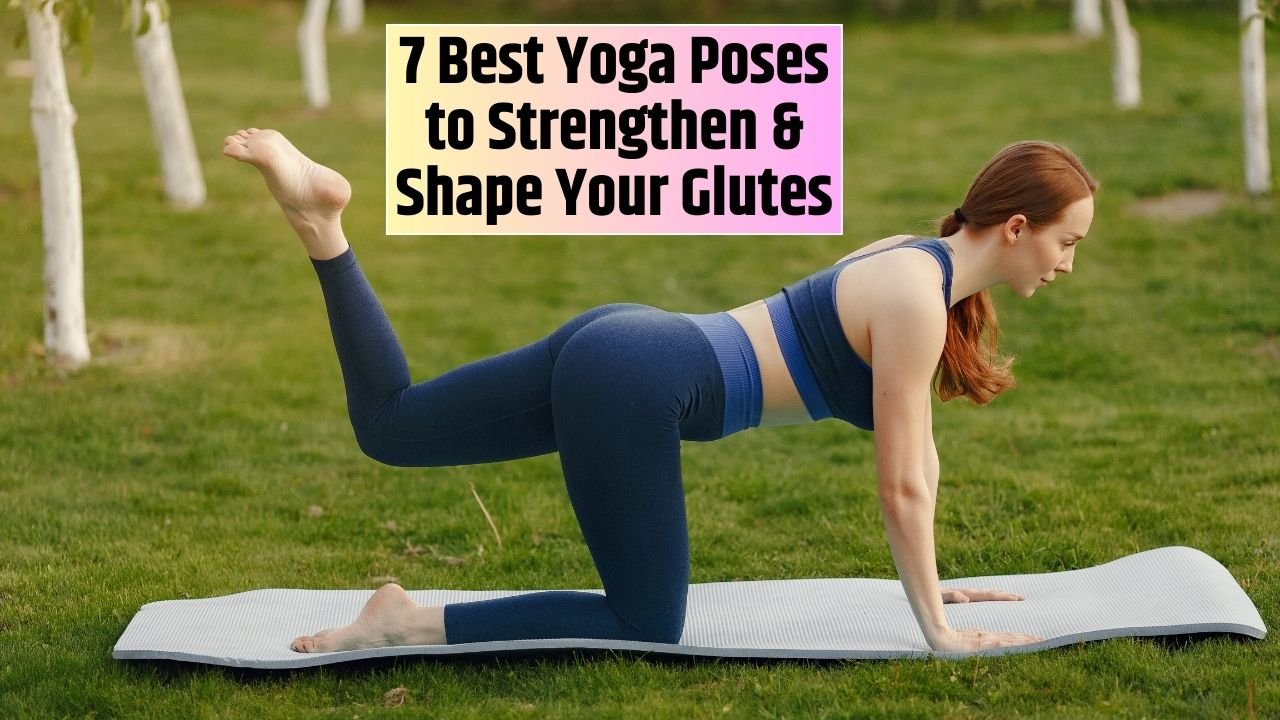

Strong, toned glutes aren’t just about aesthetics they’re key to functional movement, good posture, injury prevention, and overall lower-body strength. Weak gluteal muscles can contribute to lower back pain, knee strain, poor alignment, and reduced athletic performance.
While traditional strength training is effective, yoga offers a powerful, low-impact, and holistic alternative. With mindful movement, sustained holds, and bodyweight resistance, yoga strengthens the glutes while also enhancing balance, flexibility, and core stability.
In this article, we’ll explore 7 highly effective yoga poses to tone and strengthen your glutes, including benefits, how to practice each pose correctly, and tips to maximize your results—no equipment required.
Why Strong Glutes Matter
Your glute muscles are responsible for hip extension, rotation, and stabilization—critical in walking, lifting, climbing, and balancing.
Benefits of Strong Glutes:
- Improved posture and spinal support
- Reduced lower back and knee pain
- Better balance and joint stability
- Enhanced athletic power (running, jumping, lifting)
- Efficient everyday movement and injury prevention
The glute muscle group includes:
- Gluteus maximus – largest muscle, responsible for power and shape
- Gluteus medius – key for hip stabilization and balance
- Gluteus minimus – supports hip movement and alignment
How Yoga Strengthens Your Glutes
Yoga builds glute strength by:
- Using body weight as resistance
- Activating muscles through isometric holds
- Improving muscle engagement and control
- Increasing mobility and flexibility
- Enhancing mind-muscle connection (awareness of how your body moves)
Glute-Strengthening Yoga Pose Overview
| Yoga Pose | Primary Glute Focus | Difficulty | Key Benefits |
|---|---|---|---|
| Chair Pose | Gluteus maximus | Beginner | Builds endurance, posture & strength |
| Bridge Pose | Gluteus maximus | Beginner | Tones glutes & supports lower back |
| Warrior III | Gluteus medius & maximus | Intermediate | Boosts balance, stability & control |
| Goddess Pose | Gluteus maximus | Beginner–Inter | Strengthens thighs, hips & inner glutes |
| Locust Pose | Gluteus maximus | Beginner | Enhances back strength & posterior chain |
| Half Moon Pose | Gluteus medius | Intermediate | Improves hip stability & balance |
| One-Legged Chair Pose | Glute max + medius (unilateral) | Advanced | Corrects imbalances & tones deeply |
1. Chair Pose (Utkatasana)
Chair Pose mimics the motion of sitting, actively engaging your glutes, thighs, and core.

How to Do It:
- Stand with feet hip-width apart
- Inhale: lift arms overhead
- Exhale: bend knees and lower hips as if sitting
- Weight in heels, core engaged
- Hold for 30–60 seconds
Tips:
- Keep knees behind toes
- Squeeze glutes gently throughout
- Keep spine long and chest lifted
2. Bridge Pose (Setu Bandhasana)
Bridge Pose is great for glute isolation and ideal for beginners and recovery.
How to Do It:
- Lie on your back, knees bent, feet hip-width apart
- Press into feet and lift hips
- Engage glutes, avoid over-arching the back
- Hold for 20–45 seconds
Tips:
- Keep thighs parallel
- Focus on lifting with the glutes, not the back
3. Warrior III (Virabhadrasana III)
A balancing powerhouse, Warrior III strengthens the standing leg and gluteus medius.
How to Do It:
- Begin standing, shift weight to left leg
- Hinge at hips, extend right leg back
- Reach arms forward or place hands at heart
- Keep body in a straight line
- Hold for 20–40 seconds, then switch sides
Tips:
- Engage the lifted leg
- Keep hips square
- Focus gaze to maintain balance
4. Goddess Pose (Utkata Konasana)
A wide-legged squat pose that activates glutes, inner thighs, and hips.
How to Do It:
- Stand with feet wide, toes turned out
- Bend knees to 90°, lower hips
- Hands at heart or arms extended
- Hold for 30–60 seconds
Tips:
- Press knees outward
- Engage core and glutes
- Keep shoulders relaxed
5. Locust Pose (Salabhasana)
This prone backbend strengthens the glutes, hamstrings, and lower back.
How to Do It:
- Lie face down, arms along sides
- Inhale: lift chest, arms, and legs off the floor
- Squeeze glutes to lift legs
- Hold for 20–30 seconds
Tips:
- Keep legs straight and neck neutral
- Focus on slow, controlled lifting
6. Half Moon Pose (Ardha Chandrasana)
A challenging balance pose that tones the side glutes and builds hip control.
How to Do It:
- Begin in Triangle or Warrior II
- Place one hand on the floor (or block)
- Lift the back leg parallel to the ground
- Open hips and chest
- Hold for 20–40 seconds each side
Tips:
- Keep lifted leg active
- Engage core and glute on standing leg
- Use a wall or block if needed
7. One-Legged Chair Pose
An advanced glute-builder, this pose tones each glute separately, improving balance and symmetry.
How to Do It:
- Start in Chair Pose
- Lift one foot off the ground
- Keep hips level, sit deeper into standing leg
- Hold for 20–30 seconds, then switch
Tips:
- Engage core and glutes
- Avoid collapsing into standing hip
- Breathe slowly and stay focused
How Often to Practice for Results
To see improvement in tone, strength, and stability:
Frequency: 3–5 times per week
Repetitions: Hold each pose 30–60 seconds, repeat 2–3 rounds
Consistency: Regular practice > intense effort
Breathing: Breathe deeply to support endurance and focus
Common Mistakes to Avoid
Rushing through poses
Holding your breath
Letting knees collapse inward (especially in squats)
Not consciously engaging glutes
Sacrificing form for depth
Yoga offers a safe, effective, and mindful way to strengthen your glutes. These 7 poses don’t just sculpt and tone—they support functional movement, stability, and overall well-being.
By combining strength, balance, and mobility, yoga gives you the tools to build strong glutes naturally and holistically, without needing heavy weights or machines.
Stick with your practice, stay consistent, and remember glute strength is not just built at the gym. It’s built in your breath, your awareness, and your commitment to move with purpose.
