
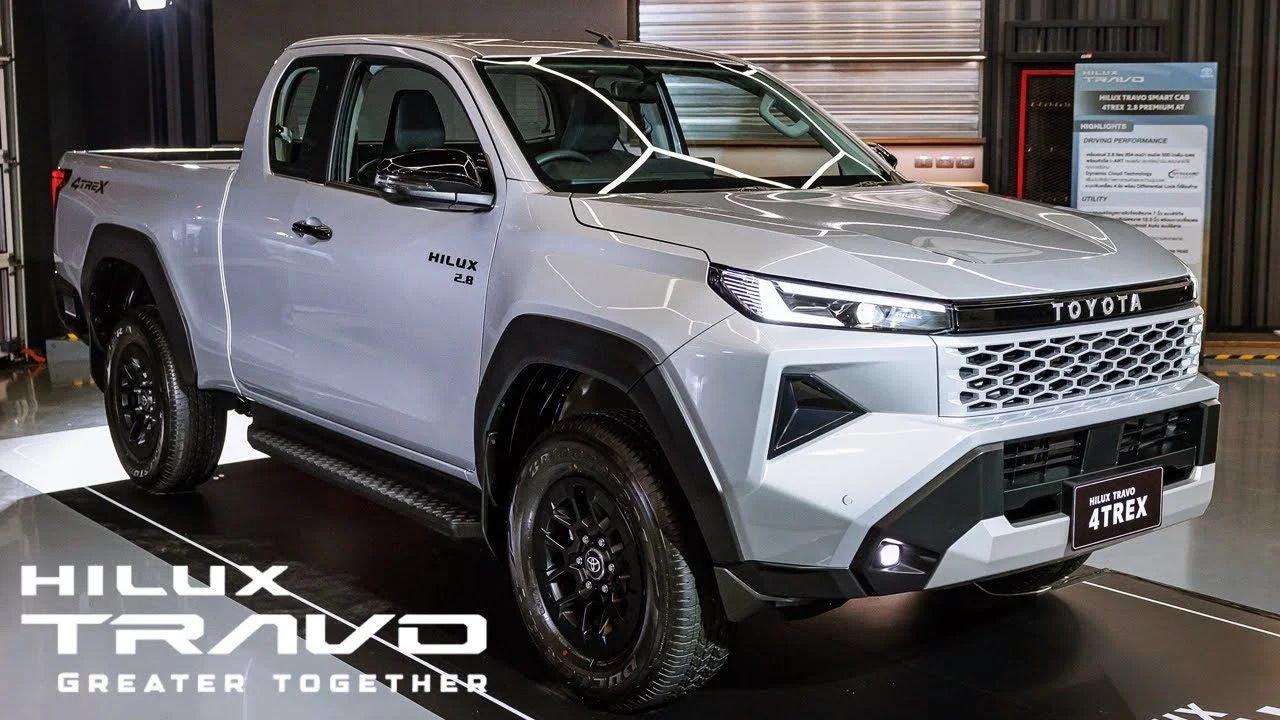

The 2026 Toyota Hilux has officially dropped, and it’s not just a facelift it’s a full-blown evolution. From construction zones in Mumbai to cattle farms in Texas, this pickup has long been a global workhorse. But now? It’s rolling in with smarter tech, sleeker looks, and that rare ability to handle both mud trails and morning commutes like a champ. Toyota’s message is loud and clear: the Hilux is still the king of reliable trucks, just dressed in modern armor.
What’s New in the 2026 Toyota Hilux?
Let’s cut to the chase: Toyota’s taken the Hilux’s no-nonsense DNA and infused it with just the right amount of finesse. The new front end? Sharper. The lighting? All LED and all attitude. But the real magic is under the skin.
The suspension has been tweaked to feel less “bouncy tractor” and more “smooth operator.” You’ll still get the bulletproof toughness Hilux is known for, but now the ride doesn’t punish you on the daily. And for anyone who’s had to haul tools on Monday and tow a jet ski on Saturday, the balance between comfort and capability is spot on.
Engine Options
This year’s lineup gives buyers what they’ve been asking for: more choices without sacrificing durability.
| Engine Type | Transmission | Drivetrain | Key Features |
|---|---|---|---|
| Diesel (2.4L / 2.8L) | Manual & Auto | 4×2 / 4×4 | High torque, great for towing |
| Petrol (2.7L) | Auto | 4×2 | Smoother, better for city driving |
| Hybrid (New!) | Auto | 4×4 | Fuel efficiency + off-road capable |
The diesel variants, which still dominate in Asia, Africa, and Australia, return with more torque and less noise. The 2.8L turbo-diesel is still the go-to for anyone who needs serious pulling power—think trailers, campers, or heavy loads.

But the hybrid version is the real headline. Toyota’s taken cues from the Hybrid Fortuner and brought the tech to the Hilux. It’s not a plug-in, but it’s smart enough to cut fuel use and emissions—without watering down off-road performance. This one’s aimed squarely at fleet operators and urban buyers looking to save on gas without going full electric.
Pricing Around the World
So, what’s it gonna cost? That depends where you are. Toyota’s playing the pricing game carefully, offering a wide spread:
| Region | Estimated Starting Price (USD) | Notes |
|---|---|---|
| India | $23,000 (ex-showroom) | Diesel-focused, commercial buyers |
| Australia | $29,000 AUD | Strong 4×4 and adventure market |
| UK | £28,000 | Hybrid expected in higher trims |
| USA (unconfirmed) | N/A | Tacoma remains the U.S. counterpart |
| South Africa | R560,000 | Key market for Hilux dominance |
The base models remain work-ready and affordable. But if you want all the tech—360-degree cameras, adaptive cruise, wireless CarPlay—you’ll pay north of $40,000 in some markets. Still, that’s par for the course in today’s pickup wars.
Inside the Cabin
Step inside, and it’s clear Toyota didn’t skimp. No, you’re not getting Lexus luxury—but it no longer feels like a farm tool either.

- Touchscreen: Bigger, faster, and supports both Apple and Android wireless systems.
- Seats: Higher trims get leather or faux-leather, with heating in colder markets.
- Noise Insulation: Significantly better. You can actually talk on Bluetooth now at 60 mph.
- Rear Comfort: More legroom in double-cab versions. Crew haulers, rejoice.
It’s clear the 2026 Hilux is now designed with families and daily drivers in mind, not just contractors and cattlemen.
Safety First
Toyota continues to push safety as a selling point. The Hilux now comes with an updated Toyota Safety Sense suite, including:
- Pre-collision system with pedestrian and cyclist detection
- Lane departure alert with steering assist
- Adaptive cruise control (on most trims)
- Blind-spot monitoring and rear cross-traffic alert
For a truck that used to be all brawn and zero brains, this is a serious leap forward. And considering pickup crash rates, it’s timely too.
Global Availability and Trim Breakdown
While Toyota hasn’t confirmed U.S. entry (the Tacoma still rules here), markets like Australia, South Africa, India, and Thailand are already lining up.

Here’s a rough breakdown of what you’ll see globally:
| Trim Level | Target Buyer | Notable Features |
|---|---|---|
| Workmate / Base | Fleets, contractors | Steel wheels, basic interior |
| SR / Mid-trim | Daily drivers | Alloy wheels, infotainment, auto A/C |
| SR5 / Top | Lifestyle buyers | Hybrid option, 4×4, full safety tech |
| GR Sport | Off-road lovers | Bilstein suspension, sport grille, paddle shifters |
Why the Hilux Still Matters in 2026
Here’s the deal: with electric trucks stealing headlines and full-size pickups getting pricier every year, the Hilux is a global middle-ground. It’s still affordable, still bulletproof, and now just modern enough to keep up with the times.
More than just a truck, in many countries the Hilux is part of the economic backbone—hauling bricks, feeding families, exploring wilderness, and even serving in militaries. And this 2026 version doesn’t betray that legacy—it elevates it.
As one Aussie dealer put it, “You don’t test the Hilux. It tests you.”

FAQs
Not yet, but EV prototypes have been shown in Asia. A full electric Hilux may arrive post-2026.
Early estimates suggest around 6.5–7.0 L/100 km (roughly 36–40 mpg), depending on drive mode and load.
Yes, though not as much as the diesel. Expect slightly lower max towing capacity—around 2,800 kg.
Yes. Toyota Safety Sense upgrades mean better crash prevention and highway driving safety.
Australia, South Africa, and parts of Europe are confirmed. Other markets may follow based on demand.
