
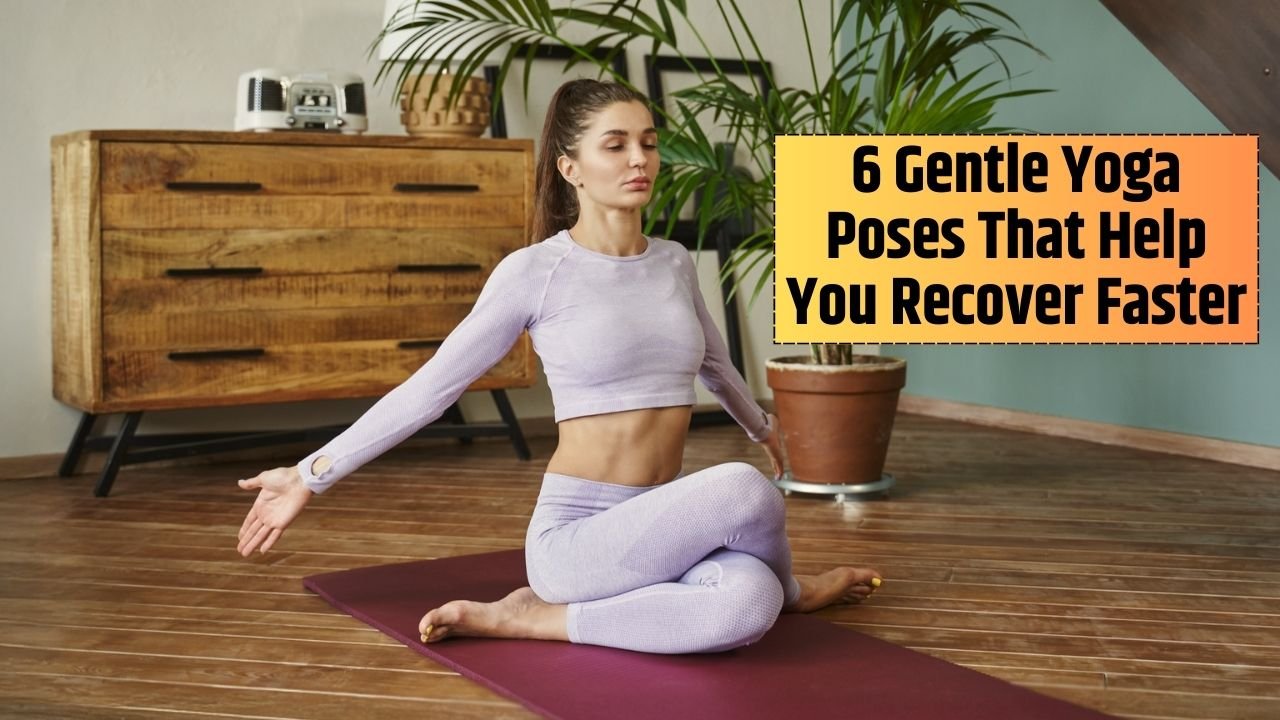

Modern life doesn’t let up. Between long workdays, packed schedules, high-intensity workouts, jet lag, poor sleep, and mental overload, your body’s natural recovery system barely gets a chance to catch its breath. That “just a little sore” feeling can quietly snowball into fatigue, tension, or burnout unless you actively support your recovery.
That’s where yoga steps in—not the sweaty, power-flow kind, but the gentle, calming kind your nervous system actually needs. Recovery yoga isn’t about getting stronger or more flexible. It’s about helping your body hit the brakes, repair, and bounce back—so you wake up feeling like a human again, not a sore robot.
Here are six yoga poses designed to fast-track your recovery and leave you feeling rested, restored, and ready.
1. Child’s Pose (Balasana)
Don’t sleep on this pose just because it looks simple. Child’s Pose is the ultimate reset button—physically and mentally. When your forehead touches the floor, your body gets the signal: time to relax. It’s like a full-body sigh.
Why it works:
- Gently stretches the spine, hips, and shoulders
- Calms the brain and reduces stress hormones like cortisol
- Encourages diaphragmatic breathing, which boosts oxygen flow to tired tissues
Best time to try: After a long day or intense workout, when your back feels tight and your brain is fried.
2. Legs Up the Wall (Viparita Karani)
This one’s so effective it’s practically a cheat code for recovery. Just lie down, swing your legs up a wall, and let gravity do the rest. You’ll feel the tension draining out of your legs.

Benefits:
- Reduces swelling and fatigue in the feet and calves
- Improves venous return and lymphatic drainage
- Calms the sympathetic nervous system (your fight-or-flight mode)
Studies show that restorative postures like this can reduce blood pressure and heart rate—key markers of relaxation and recovery.
3. Supine Figure Four Pose
If you’ve ever felt tight in your hips or lower back after sitting all day or squatting hard, this is your go-to move. Supine Figure Four stretches the deep hip rotators (hello, piriformis) without adding strain to the knees or spine.
Why it’s a recovery favorite:
- Gently releases tension from the glutes and outer hips
- Increases blood flow to often-neglected muscles
- Supports spinal alignment by reducing asymmetry in the hips
Tip: Keep your shoulders relaxed and breathe into the sensation—not through gritted teeth.
4. Seated Forward Bend (Paschimottanasana)
A calming pose that stretches the entire back of the body, from calves to spine. This forward fold isn’t about touching your toes—it’s about slowing everything down.

Recovery perks:
- Lengthens tight hamstrings and calves
- Relieves nervous tension and quiets the mind
- Encourages introspection and breath awareness, which activates the parasympathetic system
Forward folds are known to lower brainwave activity, according to yogic science literature, making them ideal for mental and physical unwinding.
5. Reclined Bound Angle Pose (Supta Baddha Konasana)
This one’s pure bliss. Reclining with the soles of your feet together and knees falling wide opens up your hips and chest while giving your body full permission to rest.
What it heals:
- Loosens tension in the inner thighs and groin
- Restores hormonal balance and reduces cortisol
- Enhances parasympathetic activation, which supports tissue repair
This is a pose to linger in. Add a bolster or pillow under your spine for extra support—and let gravity melt away the day.
6. Supine Spinal Twist
Simple, gentle, and surprisingly powerful. Twists help wring out tightness from the spine and stimulate internal organ function, which supports detox and digestion—key recovery elements that don’t get much hype but matter a lot.

Recovery effects:
- Relieves lower back tension and spinal compression
- Increases circulation to abdominal and spinal tissues
- Supports lymphatic drainage and gentle detoxification
Important: Keep the twist gentle. This isn’t about how far you can go—it’s about unwinding the spine and relaxing your breath.
Why These Poses Help You Recover Faster
Here’s the science behind the calm: recovery yoga activates the parasympathetic nervous system—your body’s “rest and repair” mode. That’s when the real magic happens.
| Yoga Element | Recovery Benefit |
|---|---|
| Deep Breathing | Lowers cortisol, slows heart rate |
| Gentle Movement | Improves circulation without draining energy |
| Stillness & Awareness | Calms the mind, reduces mental fatigue |
| Supported Poses | Enhances muscle relaxation, boosts tissue repair |
Most modern workouts push us into “go harder” mode. But healing happens in the pause. By focusing on restorative poses, you let your body do what it’s naturally wired to do—repair, rebuild, and recharge.
How Often Should You Practice Recovery Yoga?
You don’t need to wait for soreness to hit. Recovery yoga is most effective when it becomes part of your regular rhythm—not just damage control after a hard workout.
| Situation | Best Practice Time |
|---|---|
| Post-workout soreness | 20–30 minutes, later same day |
| High stress or poor sleep | Before bed or upon waking |
| Regular wellness routine | 3–5 times a week |
| Traveling or jet lag recovery | Evening practice |
No need for sweat, music, or mirrors. Just a quiet space and some deep, conscious breathing.

Recovery isn’t lazy—it’s strategic. If you’re always pushing, your gains eventually stall. But if you build in time to rest, restore, and breathe? You’ll bounce back stronger and faster.
These six yoga poses are more than stretches—they’re medicine for your nervous system and fuel for your muscles. Whether you’re a runner, lifter, desk worker, or parent on zero sleep, recovery yoga helps you feel human again.
Try it tonight. Your body will thank you tomorrow.
FAQs
Ideally in the evening, after workouts, or on rest days to support healing and sleep.
Hold each pose for 1–3 minutes. The longer, the better—as long as it feels comfortable.
Absolutely. Every pose here is beginner-friendly and can be modified with props.
Yes. By improving circulation and reducing tension, it shortens recovery time and eases soreness.
Yes! Unlike high-intensity workouts, recovery yoga can be done every day without risk of overtraining.
