
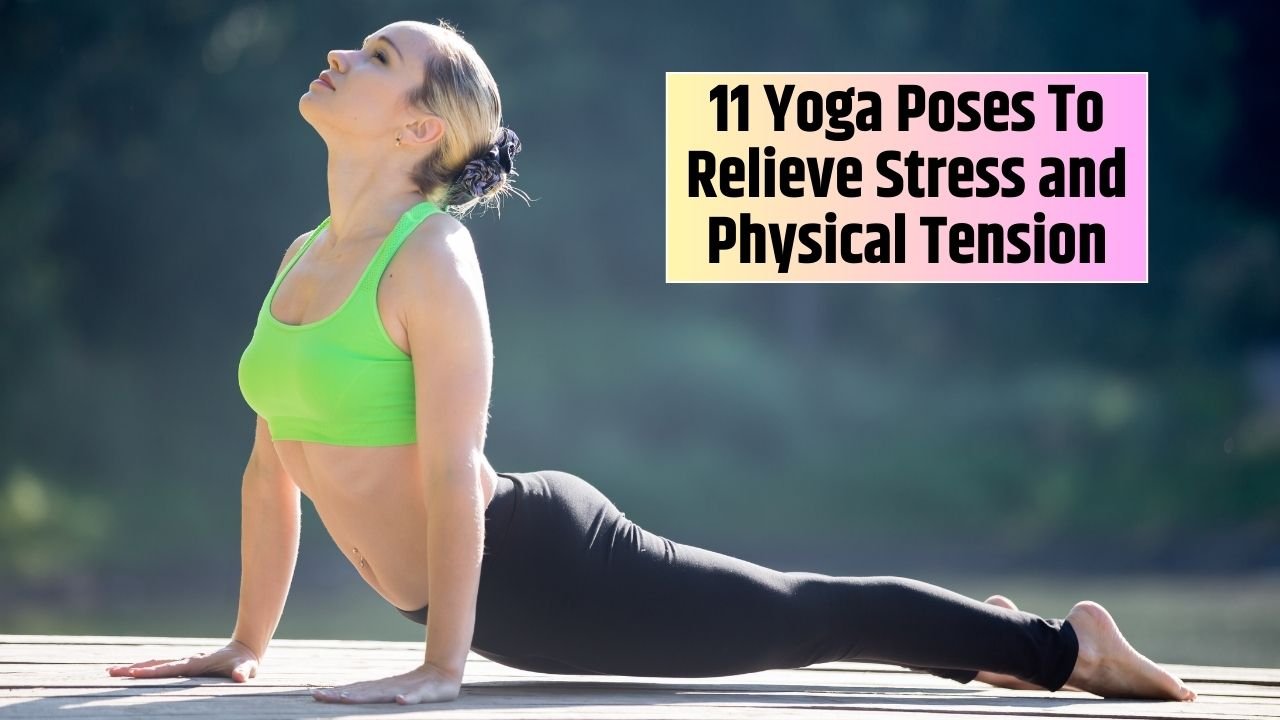

In a world that rarely slows down, tension has become a silent companion in our daily lives. We feel it in our necks after hours on a screen, in our lower backs from sitting too long, and in our minds as stress simmers just beneath the surface. But unlike a temporary headache or sore muscle, tension doesn’t just go away on its own it builds, lingers, and quietly chips away at our physical and emotional well-being.
Enter yoga. Not as a trendy workout or Instagram pose collection, but as an ancient, deeply practical solution for modern stress. It meets you where you are tired, tight, overwhelmed and helps you release, soften, and come back to yourself.
These 11 yoga poses are more than stretches. They’re invitations to slow down, reconnect, and let go of the tension stored in your body and mind. Let’s walk through how they work, why they help, and how to make them part of your daily life.
Why Yoga Works for Tension (It’s Not Just the Stretching)
Tension isn’t just a tight muscle—it’s often a nervous system stuck in overdrive. Deadlines, worries, posture problems, and poor sleep habits keep the body in a low-level fight-or-flight mode. Muscles tighten. Breathing shortens. Your mind spins.
Yoga works because it flips that switch. Through slow movement, focused breath, and mindful stillness, yoga activates the parasympathetic nervous system—the body’s built-in repair mode.
Here’s what happens:
| Tension Source | Yoga’s Response |
|---|---|
| Tight muscles | Lengthens and releases them safely |
| Shallow breathing | Re-trains deep, calming breath |
| Poor posture | Realigns the spine and opens the chest |
| Racing thoughts | Brings focus to the present moment |
| Emotional stress | Encourages release through movement and stillness |
Top 11 Yoga Poses to Relieve Tension
1. Child’s Pose (Balasana)
A go-to for instant calm. This resting pose grounds your body, soothes the nervous system, and gently stretches the back and shoulders.
Targets: Lower back, shoulders, hips, mind
Best Time: Morning / Evening
How long: 1–3 minutes
Why it works: Pressing the forehead to the mat signals the brain to relax.
Pro Tip: Place a pillow under your belly or forehead for extra comfort.
2. Cat–Cow Pose (Marjaryasana–Bitilasana)
This gentle spinal flow resets posture and melts away tension from hours of sitting.
Targets: Spine, neck, upper back
Best Time: Morning
How long: 5–10 breath cycles
Why it works: It massages the spine and improves circulation.

Pro Tip: Move with your breath—inhale for Cow, exhale for Cat.
3. Standing Forward Bend (Uttanasana)
Letting your head hang is a game-changer for relieving neck and back tension—and for calming mental noise.
Targets: Hamstrings, spine, neck
Best Time: Morning
How long: 30–60 seconds
Why it works: Inversion improves blood flow to the brain and eases pressure on the spine.
Pro Tip: Keep knees soft if your hamstrings are tight.
4. Seated Forward Bend (Paschimottanasana)
A deeply calming pose that stretches the spine and shifts the nervous system into “rest” mode.
Targets: Back, nervous system
Best Time: Evening
How long: 1–2 minutes
Why it works: Forward folds naturally turn attention inward, reducing anxiety.
Pro Tip: Sit on a cushion to help tilt the pelvis forward and avoid straining your back.
5. Legs Up the Wall (Viparita Karani)
Total reset mode. This restorative pose reverses gravity, eases swelling, and helps you sleep better.
Targets: Legs, lower back, mind
Best Time: Night
How long: 5–10 minutes
Why it works: It calms the heart rate, improves lymph flow, and relieves tired legs.
Pro Tip: Place a folded blanket under your hips for gentle support.

6. Supine Spinal Twist (Supta Matsyendrasana)
Perfect after a long day. This reclining twist wrings out spinal tension and soothes digestion.
Targets: Spine, hips, internal organs
Best Time: Evening
How long: 30–60 seconds each side
Why it works: Twisting realigns the spine and stimulates detox pathways.
Pro Tip: Keep both shoulders grounded and use a pillow under the knee if needed.
7. Cobra Pose (Bhujangasana)
Counteracts slouching and opens the front body, especially helpful for tech-neck sufferers.
Targets: Chest, shoulders, spine
Best Time: Morning
How long: 15–30 seconds
Why it works: Expands the lungs, opens the heart, and improves posture.
Pro Tip: Keep elbows bent and shoulders relaxed—avoid forcing a high lift.
8. Neck Stretch Pose
A seated or standing stretch that targets one of the most tension-prone areas in the body.
Targets: Neck, upper spine
Best Time: Anytime
How long: 3–5 slow breaths per side
Why it works: Releases built-up tightness from screen time and stress.
Pro Tip: Move slowly. Gentle is more effective than deep in this area.
9. Bridge Pose (Setu Bandhasana)
A backbend that feels both energizing and grounding. Great for unwinding tension in the hips and spine.

Targets: Lower back, hips, thighs
Best Time: Evening
How long: 30–60 seconds
Why it works: Opens the front body while strengthening the back body.
Pro Tip: Squeeze a block between the thighs to engage the inner legs and protect the back.
10. Happy Baby Pose (Ananda Balasana)
A light-hearted pose that gently opens the hips and decompresses the lower spine.
Targets: Hips, inner thighs, lower back
Best Time: Night
How long: 1–2 minutes
Why it works: Calms the nervous system and gently rocks the pelvis.
Pro Tip: Rock side-to-side for a subtle massage effect.
11. Corpse Pose (Savasana)
The ultimate pose of surrender. Stillness, presence, and total release.
Targets: Whole body, mind
Best Time: Anytime (especially after yoga)
How long: 5–10 minutes
Why it works: Resets the nervous system and integrates the benefits of your practice.
Pro Tip: Cover your eyes and use a blanket to signal total rest.
How to Practice for Maximum Tension Relief
You don’t need a 60-minute routine. What matters is consistency, intention, and breath.
Quick Routine (15–20 mins):
- Child’s Pose – 2 mins
- Cat-Cow – 1 min
- Standing Forward Bend – 1 min
- Seated Forward Bend – 1–2 mins
- Legs Up the Wall – 5 mins
- Supine Twist – 1 min per side
- Savasana – 5 mins
Tips:
- Turn off notifications—this is your time.
- Breathe through the nose, slowly and steadily.
- Use soft lighting or calming music.
- Move gently—no rushing, no forcing.
- Practice daily if possible, especially at night.
Tension may come from modern life—but so can relief. Yoga doesn’t ask for perfection or flexibility. Just attention. Breath. A little time. In return, it gives you space—inside your body, your breath, and your mind.
These 11 yoga poses to relieve tension are simple enough for beginners and powerful enough to support long-term well-being. Practice them regularly, and you’ll notice more than just looser muscles—you’ll feel more grounded, more present, and more at ease with yourself.
Start small. Keep breathing. And let yoga bring you home to calm.
FAQs
Even 15 minutes daily can make a big difference. Aim for 3–5 times a week at minimum.
Yes. Each pose is beginner-friendly and can be modified with props like cushions or blocks.
Evenings are ideal for relaxation, but anytime you feel stressed or tight is a good time to move and breathe.
Perfection isn’t the goal. Modify, use support, and focus on how it feels—not how it looks.
Absolutely. Many poses support mental clarity and emotional regulation through deep breathing and mindfulness.
