
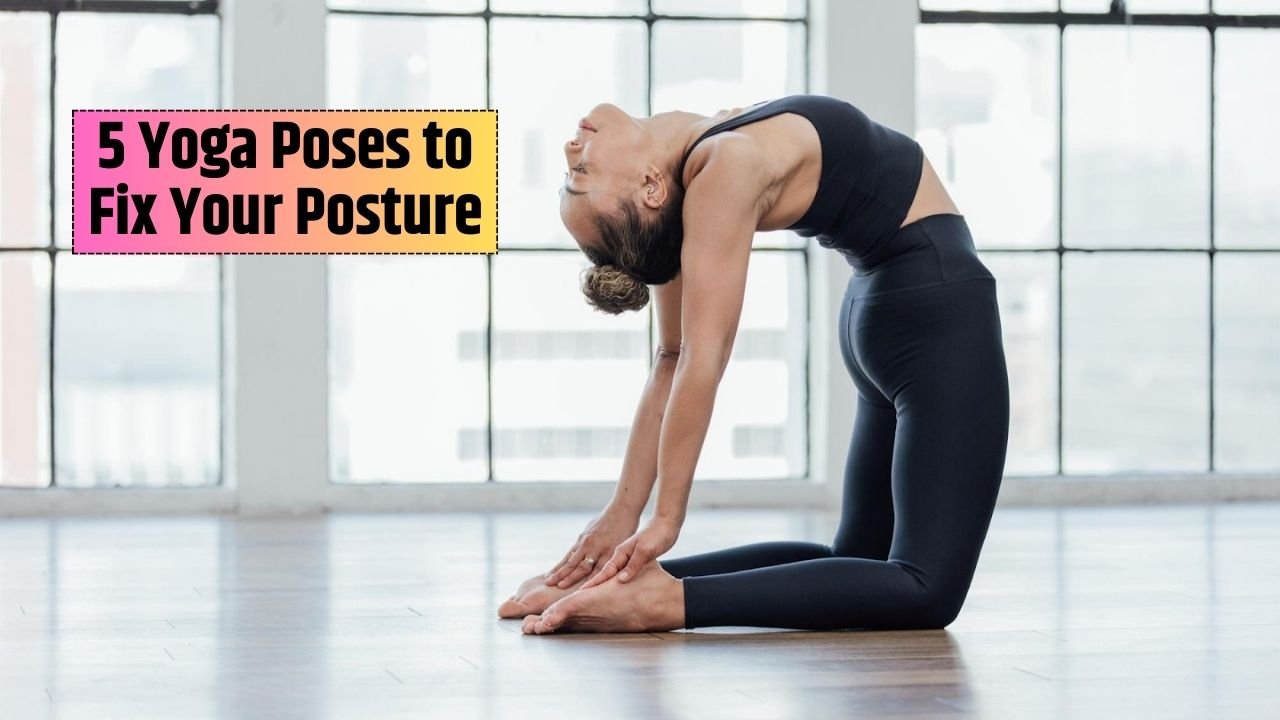

It starts subtly shoulders creeping forward, neck jutting out like a turtle, and before you know it, you’re stuck in a slouch that feels harder to escape each day. Blame it on the screens, the chairs, or just life moving too fast. But poor posture isn’t just about how you look. It messes with your breathing, digestion, and confidence and yes, that nagging back or neck pain? Likely tied to the way you’re sitting right now.
The fix? It doesn’t have to be complicated. Yoga offers a low-impact, deeply effective way to retrain your body into standing tall and moving with purpose. These five yoga poses are simple, powerful, and beginner-friendly tools to reset your posture and rebuild alignment from the ground up.
Mountain Pose (Tadasana)
Don’t let the simplicity fool you this pose is a postural powerhouse.
Stand with your feet hip-width apart. Distribute your weight evenly. Engage your thighs, lift your kneecaps, and draw your belly in slightly. Extend your arms by your sides, palms facing forward or bring them together at heart center. Chin stays level, gaze straight.
Why it matters: Mountain Pose teaches your body what neutral alignment feels like. It strengthens leg and core muscles while increasing awareness of your posture throughout the day.
Tip: Imagine a string pulling the crown of your head up toward the ceiling while your feet root firmly down. Feel that opposition? That’s your spine lengthening.
Cat-Cow Pose (Marjaryasana-Bitilasana)
This dynamic duo gets your spine moving like it’s meant to.

Begin on all fours, wrists under shoulders, knees under hips. Inhale, drop your belly and lift your chest and tailbone (Cow). Exhale, round your back, tuck chin and tailbone (Cat). Flow between the two for 8–10 rounds.
Why it matters: It’s like oiling the spine. Cat-Cow loosens tight muscles, especially in the mid and upper back, while reinforcing spinal articulation—a fancy way of saying “move better, hurt less.”
Tip: Keep your movements smooth and breath-guided. You’re not trying to force flexibility—just coaxing the spine awake.
Cobra Pose (Bhujangasana)
A must if you sit all day with your chest collapsed and shoulders rounded.
Lie flat, legs extended, palms under shoulders. Press the tops of your feet into the mat. As you inhale, lift your chest—elbows bent, shoulders sliding down and back.
Why it matters: Cobra strengthens the lower back and opens the chest. This is your anti-slouching medicine. It also activates the spinal extensors—the muscles that help you stand up straight without strain.

Tip: Keep your glutes relaxed and pelvis grounded. Think of the lift coming from your upper back, not your arms.
Bridge Pose (Setu Bandhasana)
Now we’re talking structure. Bridge is where posture and strength come together.
Start on your back, knees bent, feet hip-width apart. Press into your feet and arms to lift your hips. Engage your glutes and inner thighs. Hold for 20–30 seconds. Lower slowly.
Why it matters: It strengthens everything that keeps your posture upright—glutes, hamstrings, lower back, and even the deep core. Plus, it opens tight hip flexors and shoulders, two major posture culprits.
Tip: Try squeezing a yoga block or small pillow between your knees to keep legs aligned and avoid wobbling.
Child’s Pose (Balasana)
Let’s not forget rest is part of the reset.

From kneeling, bring big toes together, knees wide or hip-width. Sit back on heels and stretch your arms forward. Rest your forehead on the mat and breathe.
Why it matters: This restorative pose lengthens the spine, releases tension from the lower back and shoulders, and cultivates awareness. The more you feel where your body’s out of line, the more you can correct it.
Tip: Use props! A folded blanket under your hips or a block under your forehead makes this pose more accessible and relaxing.
Additional Tips for Improving Posture with Yoga
A pose here and there won’t magically fix years of hunching—but done consistently? That’s where transformation lives.
- Consistency is king: Even 15 minutes daily is better than an hour once a week.
- Core is everything: Most postural issues stem from a weak or disengaged core. Always engage your abs gently in standing and strengthening poses.
- Mind the desk: Yoga helps, but if your chair’s bad and your screen’s low, the slouch will sneak back. Combine yoga with good ergonomics.
- Slow it down: Rushing through poses won’t give your body time to adjust. Slower movements build muscle memory.
- Props are your friends: Blocks, straps, bolsters—they’re not signs of weakness. They help your body find safe alignment.
Here’s a quick summary:
| Pose | Key Benefits for Posture |
|---|---|
| Mountain Pose | Teaches upright alignment, engages postural muscles |
| Cat-Cow | Improves spinal mobility and awareness |
| Cobra Pose | Opens chest, strengthens upper back |
| Bridge Pose | Builds strength in core, back, and hips |
| Child’s Pose | Releases tension, resets spine awareness |
Good posture isn’t about being rigid—it’s about moving through life with ease, strength, and confidence. Yoga helps you build that from the inside out.
FAQs
Yes, with regular practice and conscious posture during daily activities, yoga can help rewire your muscle memory and correct poor habits.
Start with 20–30 seconds and gradually work up to a minute, depending on the pose and your comfort.
They complement each other. Yoga builds flexibility and alignment awareness, while strength training builds postural support muscles.
Many people report feeling more upright and aware within 2–3 weeks of consistent practice.
Absolutely. Yoga stretches and strengthens the muscles that often contribute to neck and shoulder tension caused by poor posture.
