
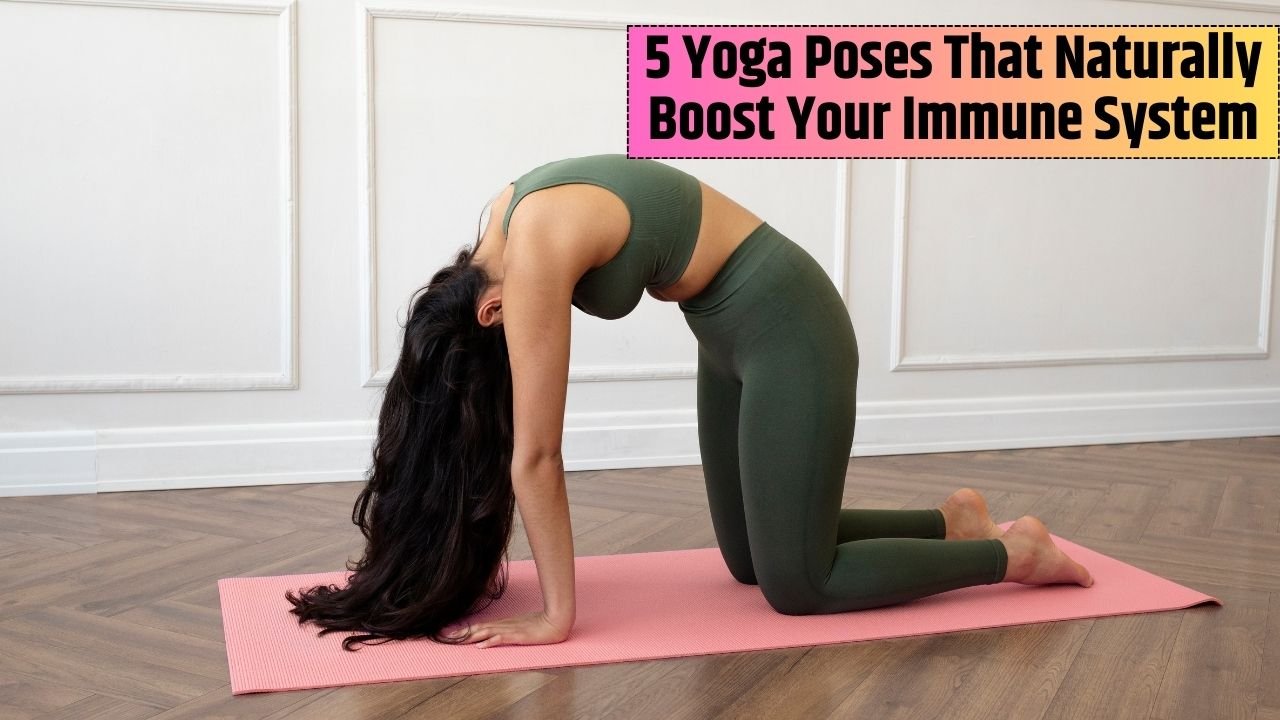

When it comes to staying healthy, most of us think of loading up on vitamin C, sipping ginger tea, or getting our 10,000 steps. But there’s a secret weapon we often overlook — one that requires no supplements or trackers. Just a mat, your breath, and a bit of space. Yoga.
Yes, your immune system — that quiet army working 24/7 behind the scenes — thrives on more than green juice and flu shots. It loves movement, oxygen, rest, and most of all, a stress-free environment. That’s where yoga comes in. In this article, we’re spotlighting five yoga poses that go beyond just feeling good — they actively support and strengthen your immunity.
Let’s break down the poses that not only stretch your body, but also fortify your health.
Downward-Facing Dog (Adho Mukha Svanasana)
This pose may show up in nearly every yoga class, but it’s more than a warm-up. It’s a head-to-toe immunity booster.
How to do it:
Start in a tabletop position. Tuck your toes and lift your hips high, forming an upside-down V. Hands shoulder-width, feet hip-width. Press your heels toward the floor (even if they don’t touch — it’s fine) and relax your neck.
Hold for: 20–30 seconds, breathing deeply
Why it works:
Downward Dog sends fresh blood to the brain and organs, improving circulation and oxygen flow. That upside-down angle helps drain lymph nodes — crucial for flushing toxins and fighting infection. Plus, the stretch itself releases tight muscles, lowering stress, which is a big immune saboteur.
Camel Pose (Ustrasana)
If immunity had a power switch, Camel Pose would be a strong contender for flipping it on.

How to do it:
Kneel with knees hip-width apart. Place your hands on your lower back. Inhale, lift your chest, and press your hips forward. Optionally, reach your hands to your heels and gently arch back, lifting through the heart.
Hold for: 20–30 seconds
Why it works:
This backbend opens the chest and lungs — the frontline of your respiratory system. Deeper breathing = more oxygen = stronger immunity. By stimulating the thymus gland (just behind the sternum), it also supports T-cell production — key players in your immune response. And emotionally? Camel is known to release heart-held tension. Big impact, inside and out.
Bridge Pose (Setu Bandhasana)
Bridge Pose isn’t just for the glutes — it’s a circulatory win that helps reboot your inner systems.
How to do it:
Lie on your back, knees bent, feet hip-width apart. Press into your feet and lift your hips. Tuck your shoulders under slightly to lift higher. Hands can clasp underneath or rest at your sides.
Hold for: 20–30 seconds, breathing steadily
Why it works:
Bridge opens up the lungs and chest while improving blood flow to the heart and brain. It gently massages the thyroid — which regulates metabolism and immunity. When you lift into Bridge, you stimulate the parasympathetic nervous system (the rest-and-digest one), creating a state where your body can repair and protect itself more effectively.
Cobra Pose (Bhujangasana)
Need a boost in respiratory strength? Cobra’s your go-to. Think of it as a physical “chest opener” and emotional energizer.
How to do it:
Lie on your belly, legs extended. Place hands under shoulders. Inhale and lift your chest using back strength (not just your hands). Keep elbows slightly bent and shoulders away from ears.
Hold for: 15–30 seconds
Why it works:
By expanding the chest, this pose encourages deeper breathing and improved lung capacity. Better breathing supports oxygenation — and your immune system loves oxygen. Cobra also activates spinal nerves, increasing vitality, and it helps release stress from the upper back and shoulders (where most of us hold tension like unpaid rent).
Legs Up the Wall (Viparita Karani)
This pose is as simple as it gets — and yet it’s one of the most powerful ways to calm the body and support immunity.
How to do it:
Sit sideways against a wall. Gently swing your legs up as you lie back. Arms rest beside you, palms up. Close your eyes and breathe slowly.
Hold for: 5–10 minutes (yes, really — this one’s meant to linger)
Why it works:
It reverses blood flow, helping lymphatic fluids move and reduce inflammation. By relaxing the nervous system, it lowers cortisol (your stress hormone), giving your immune system a chance to recover and perform at its best. It’s the yoga equivalent of a power nap.
How Yoga Supports Immunity
So what’s actually happening under the surface? Here’s a quick breakdown:
| Yoga Benefit | Immune System Impact |
|---|---|
| Deep breathing | Increases oxygen intake, supports cell function |
| Improved circulation | Boosts white blood cell activity and detoxification |
| Lymphatic movement | Flushes out toxins, supports immune cell transport |
| Stress reduction | Lowers cortisol, which can suppress immune response |
| Better sleep (from yoga) | Enhances recovery, regeneration, and immune resilience |
No supplements, no side effects. Just movement and breath.
Immunity Starts on the Mat
Your immune system isn’t something you can see, but when it’s working, you feel it — fewer colds, more energy, better recovery. Yoga doesn’t replace your multivitamin or sleep schedule, but it enhances everything else you’re already doing.
The beauty of these five poses? They’re accessible. You don’t need to be bendy or balanced or even experienced. You just need a little time, a willingness to breathe, and the intention to show up for yourself. Even 10–15 minutes a day can make a noticeable difference.
So the next time you feel run down, skip the doomscrolling and hit the mat. Your immune system will thank you — in its own quiet, powerful way.
FAQs
Yes. Studies have shown that regular yoga practice reduces inflammation, improves circulation, and lowers stress hormones all of which support immunity.
Aim for 3–5 times a week. Even short, consistent sessions (10–20 minutes) can provide benefits.
Morning or evening both work. Mornings can energize your system, while evenings help reduce stress and aid recovery.
While no practice can guarantee immunity from illness, yoga significantly supports your body’s natural defenses and resilience.
Not at all. A mat or soft surface is helpful, and you can use pillows or folded towels for support in poses like Legs Up the Wall.
