

Neck and shoulder pain it’s practically the new “common cold” of modern life. If you’ve ever spent hours hunched over your phone, glued to a laptop, or stressing through back-to-back Zoom calls, you know that dull ache creeping up your upper back all too well. The cause? Poor posture, sedentary habits, and, frankly, the digital lifestyle we’ve all fallen into. The cure, thankfully, doesn’t require expensive massages or painkillers—just a few mindful minutes of yoga.
Yoga doesn’t just stretch your muscles; it rewires how your body handles tension. Through mindful movement and deep breathing, it melts away stiffness, strengthens weak spots, and restores balance. Think of it as your body’s natural reset button.
Below are five of the best yoga poses that can ease neck and shoulder pain—gentle enough for beginners, powerful enough to bring real relief.
1. Neck Rolls (Greeva Sanchalana)
Best for: Stiff neck, reduced mobility, tech-neck pain
Neck Rolls are as simple as they sound—but when done right, they’re a lifesaver for anyone spending long hours looking down at a screen.
How to do it:
- Sit comfortably with your spine tall and shoulders relaxed.
- Drop your chin toward your chest.
- Slowly roll your head to the right, back, then left, forming a smooth circle.
- Complete 5–8 rounds in each direction, breathing evenly.
Benefits:
- Loosens stiff neck muscles
- Improves flexibility and range of motion
- Reduces tension headaches
Tip: Keep movements slow and controlled. Avoid rolling too far back if you have cervical issues.

2. Shoulder Rolls (Skandha Chakra)
Best for: Shoulder stiffness and upper back tension
If your shoulders feel like they’re permanently glued to your ears, this one’s for you. Shoulder Rolls release the pent-up stress that collects in your upper body throughout the day.
How to do it:
- Sit or stand tall with arms relaxed by your sides.
- Inhale and lift your shoulders up toward your ears.
- Exhale as you roll them backward in a circular motion.
- Do 10 rolls backward and then 10 forward.
Benefits:
- Eases shoulder tension
- Improves posture and circulation
- Reduces tightness from long hours at a desk
Tip: Match your movement with your breath—inhale to lift, exhale to drop.
3. Cat-Cow Pose (Marjaryasana–Bitilasana)
Best for: Neck, shoulders, and spine flexibility
This dynamic duo is a gentle spinal massage that improves flexibility and blood flow while easing stiffness in the neck and shoulders.

How to do it:
- Start on all fours, wrists under shoulders, knees under hips.
- Inhale, drop your belly, lift your chest, and gaze up (Cow Pose).
- Exhale, round your spine, and tuck your chin toward your chest (Cat Pose).
- Repeat 8–12 slow, mindful rounds.
Benefits:
- Increases spinal mobility
- Reduces neck and upper back tightness
- Encourages better posture
Tip: Move like you’re flowing with your breath, not rushing through reps.
4. Thread the Needle (Parsva Balasana)
Best for: Deep shoulder release and upper back pain
This underrated pose works wonders on stubborn knots around the shoulder blades—those spots you can never quite reach on your own.
How to do it:
- Begin on all fours.
- Slide your right arm under your chest, palm facing up.
- Gently rest your right shoulder and cheek on the floor.
- Hold for 20–30 seconds while breathing deeply, then switch sides.
Benefits:

- Releases deep shoulder and upper back tension
- Opens the chest and improves flexibility
- Calms the nervous system
Tip: If your shoulder feels strained, support it with a folded blanket or yoga block.
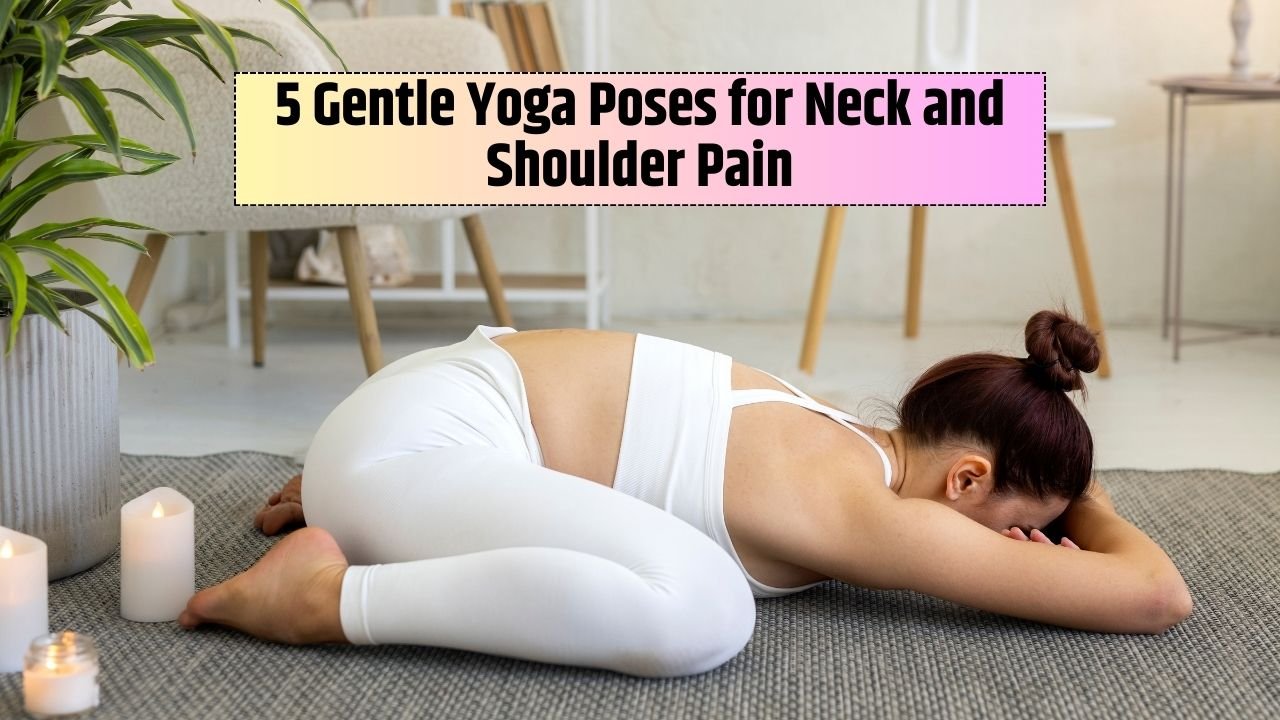
5. Child’s Pose (Balasana)
Best for: Overall relaxation and neck relief
This gentle, restorative posture stretches the spine and shoulders while inviting a deep sense of calm. It’s the ultimate “reset” pose after a long, stressful day.
How to do it:
- Kneel with big toes touching and knees apart.
- Sit back on your heels and fold forward, resting your forehead on the mat.
- Extend your arms in front of you or rest them by your sides.
- Stay here for 30 seconds to 1 minute, breathing slowly.
Benefits:
- Relieves neck, shoulder, and back tension
- Reduces stress and mental fatigue
- Promotes relaxation and better sleep
Tip: Place a pillow under your chest or forehead if you need extra support.
How Often Should You Practice?
Consistency beats intensity—always. Practicing these poses daily or at least 4–5 times a week for 10–15 minutes can lead to noticeable improvement in just a couple of weeks. If you’re working long hours, sprinkle these movements throughout the day. Even two minutes between meetings can make a difference.
Safety Tips to Remember
- Never force a stretch—pain means stop.
- Move slowly and focus on your breath.
- Avoid deep neck rolls if you have cervical spondylosis or a recent injury.
- Consult a healthcare professional if pain persists or worsens.
Neck and shoulder pain might be the price of the digital era, but it doesn’t have to be your daily companion. A few mindful yoga stretches, practiced regularly, can do more for your body than a shelf full of pain creams.
Give it 10 minutes a day your neck, shoulders, and mind will thank you.
FAQs
Many people notice relief within a week, though consistent practice over a few weeks brings lasting benefits.
Yes, all five poses are beginner-friendly and can be modified for comfort.
Either works morning energizes your body, evening helps release the day’s stress.
Not entirely. While yoga helps relieve muscular pain, consult a doctor if you have an injury or chronic condition.
Start with 20–30 seconds and gradually increase as your flexibility improves.
