
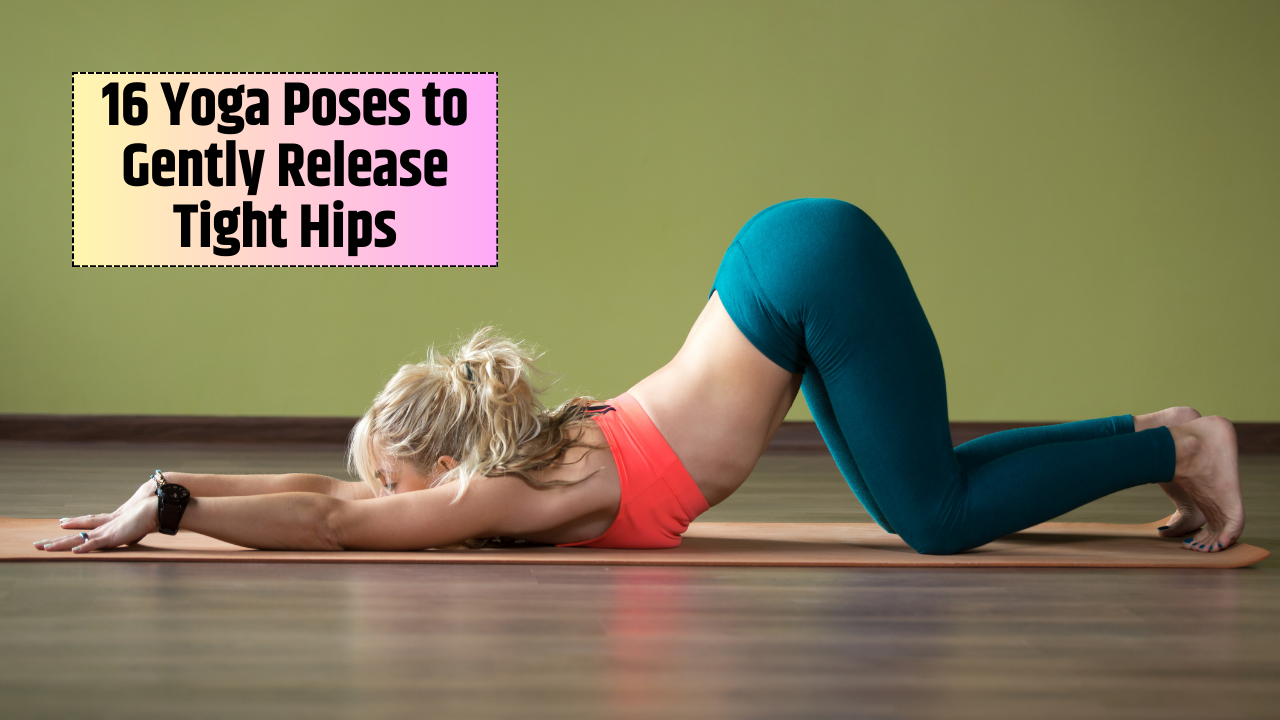

Tight hips are like the silent culprits behind a surprising number of everyday aches low back tension, poor posture, and even knee pain often trace back to stiff hips. We sit more than ever (hello, work-from-anywhere life), and over time, our hip flexors, glutes, and inner thighs start to grip and shorten. The result? Restricted movement and a body that just doesn’t feel right.
But here’s the truth: you don’t need aggressive stretching or “no pain, no gain” workouts to fix it. Yoga offers a gentler, smarter solution—one that taps into the body’s natural ability to release tension when given the right conditions. These 16 yoga poses are designed to loosen tight hips through breath, support, and slow, consistent movement. No forcing. Just steady, feel-good progress.
Why Tight Hips Develop Over Time
It’s not just about sitting (though that’s a big part). The hips are the body’s main hinge—they connect the upper and lower halves of your body and impact every step you take. So when they get tight, your whole system pays the price.
What contributes to hip tightness?
| Cause | How It Affects the Hips |
|---|---|
| Prolonged sitting | Shortens hip flexors, reduces circulation |
| Stress | Triggers unconscious gripping in the pelvis |
| Inactivity | Weakens stabilizing muscles around the joint |
| Repetitive habits | Overuses certain muscles while neglecting others |
The result? Less mobility, more tension, and compensations in the back, knees, and even your walk.
How Gentle Yoga Loosens the Hips Without Strain
Instead of forcing your hips to open, yoga encourages them to let go. How? Through calm breathing, supportive positioning, and slow progress.
When the nervous system is relaxed, the muscles follow. That’s why yoga outperforms static stretching for long-term mobility. It works with your body’s natural rhythm.
Think:
- Exhale into depth
- Use props for support
- Let gravity assist the release
- Focus more on sensation than shape
Standing Poses That Prepare the Hips
These poses build awareness, bring blood flow to the pelvis, and gently warm up the muscles that support healthy hip movement.
1. Mountain Pose (Tadasana)
Improves posture and activates the core and glutes.

2. Standing Forward Fold (Uttanasana)
Gently decompresses the spine and stretches hamstrings and hips.
3. Low Lunge (Anjaneyasana)
Targets tight hip flexors and opens the front of the hips after sitting.
4. Warrior II (Virabhadrasana II)
Strengthens the legs while encouraging external hip rotation.
5. Goddess Pose (Utkata Konasana)
Opens the inner thighs and encourages pelvic stability with a wide stance.
Pro Tip: Keep knees aligned over ankles in wide stances to protect the joints.
Seated Poses for Deeper Hip Opening
Once the hips are warm, seated poses offer a deeper release without the strain of holding your body weight.
6. Seated Forward Fold (Paschimottanasana)
Stretches hamstrings and lower back, calming the nervous system.
7. Butterfly Pose (Baddha Konasana)
Targets the groin and inner thighs, best held with back supported on a wall or cushion.
8. Seated Twist (Ardha Matsyendrasana)
Releases the waist, spine, and pelvic tension with gentle rotation.
Tip: Support the knees with cushions in Butterfly if they hover too high.
Supine Poses That Relax and Restore the Hips
Lying on your back allows your hips to open without fighting gravity.
9. Supine Figure Four (Supta Kapotasana)
Releases outer hips and glutes—especially helpful for sciatica-like tension.
10. Knees-to-Chest (Apanasana)
Decompresses the lower spine and gently massages the pelvis.
11. Happy Baby (Ananda Balasana)
Opens hips in all directions—use rocking for a gentle massage effect.
12. Supine Spinal Twist (Supta Matsyendrasana)
Encourages soft hip rotation while releasing lower back tension.
| Pose | What It Targets |
|---|---|
| Supine Figure Four | Outer hip, glute, piriformis |
| Happy Baby | Inner groin, hip socket, lower back |
| Supine Twist | Spine, waist, hip rotators |
Prone and Bridge Poses for Balance
These strengthen the muscles that support healthy hip movement—especially glutes and hamstrings.
13. Bridge Pose (Setu Bandhasana)
Releases hip flexors while activating the posterior chain. Adds balance to sitting-heavy days.
Tip: Keep knees hip-width and press evenly into both feet.
Restorative Poses for Deep Hip Release
The deepest openings happen when your body feels supported and safe.
14. Reclined Bound Angle (Supta Baddha Konasana)
Feet together, knees wide—use blocks under thighs to fully relax.
15. Child’s Pose with Wide Knees (Balasana)
Releases tension in the inner hips and gently stretches the back body.
16. Supported Pigeon (Resting Variation)
A gentler version of Pigeon Pose using props under the hips or chest to reduce pressure.
| Pose | Support Suggestions |
|---|---|
| Reclined Bound Angle | Place cushions under thighs and head |
| Wide-Leg Child’s Pose | Folded blanket under hips or forehead |
| Supported Pigeon | Bolster under hip of front leg for comfort |
The Role of Breath in Releasing Hip Tension
You can’t force a tight hip to release—but you can breathe it open.
- Inhale: Expand gently into the stretch
- Exhale: Soften, release gripping
- Longer exhales: Calm the nervous system for deeper release
Breath isn’t an accessory in yoga—it’s the mechanism of transformation.
How Often to Practice These 16 Poses
| Frequency | Duration | Expected Result |
|---|---|---|
| 3–5x/week | 15–25 mins | Noticeable hip mobility in 2–3 weeks |
| Daily | Even 5–10 mins | Maintenance of flexibility, reduced stiffness |
| After workouts | Targeted sessions | Speeds recovery, improves performance |
Remember: short and consistent > long and infrequent.
Common Mistakes to Avoid
- Forcing depth: Aim for sensation, not how far you can go
- Holding your breath: This stiffens muscles instead of softening them
- Comparing yourself: Everyone’s hips are built differently
- Skipping props: Support allows release—don’t let ego get in the way
How Looser Hips Improve Daily Life
When your hips move freely, everything else starts working better.
| Improved Function | How It Helps |
|---|---|
| Better posture | Less slouching and back strain |
| Easier walking | Smoother stride, less knee torque |
| Lower back relief | Less compensatory tension |
| Better sleep | Reduced discomfort while lying down |
| More energy | Movement becomes more efficient |
Your hips are your power center. Free them, and your whole body benefits.
Tight hips don’t need punishment—they need patience. These 16 yoga poses offer a sustainable, compassionate path to hip freedom. By practicing with breath, support, and consistency, you’ll slowly unlock movement you didn’t even realize was missing.
So take your time. Let gravity help. And trust that, with steady practice, your hips will open—and life will move a little easier because of it.
FAQs
Yes. By calming the nervous system and improving circulation, gentle yoga encourages deep muscle release without force.
Anywhere from 30 seconds to 2 minutes. Start short and build up as your body allows.
Absolutely. Every pose can be modified with props or practiced near a wall for support.
Definitely. Improving hip mobility often reduces lower back strain and realigns posture.
Yes if you practice mindfully and avoid forcing depth, daily sessions are safe and beneficial.
