
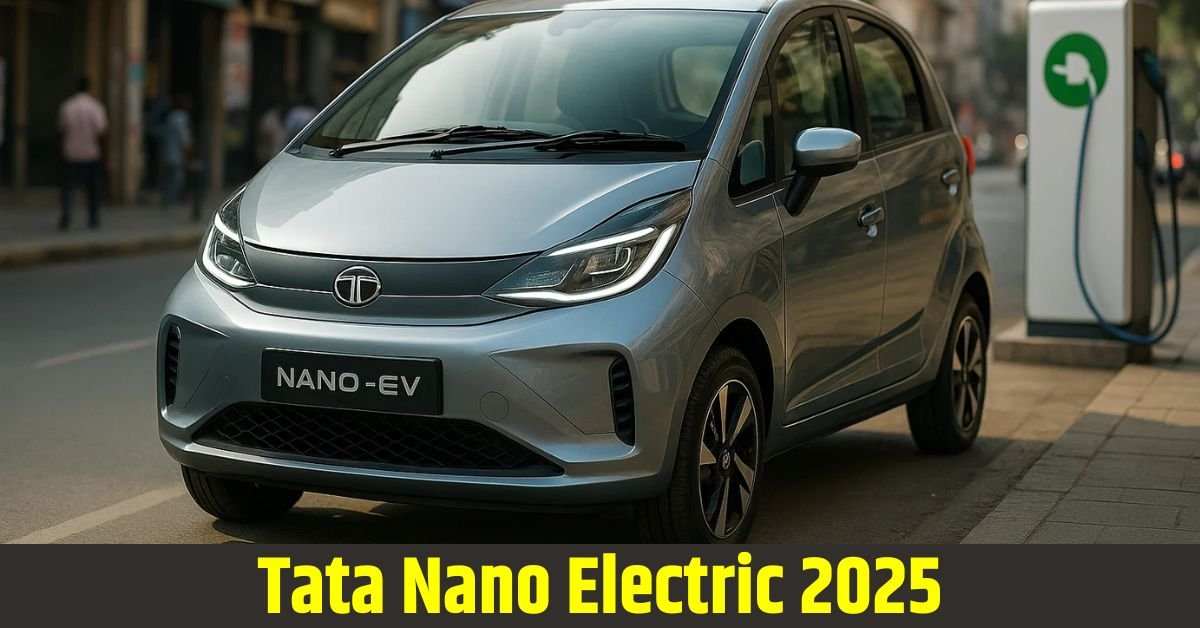

The Tata Nano—once dubbed India’s cheapest car and often lovingly mocked and praised in equal measure—is gearing up for an electric reincarnation in 2025. And no, this isn’t just another auto industry rumor. Several insider reports and supplier chain leaks suggest that Tata Motors is actively developing what could become the most affordable EV on Indian roads: the Tata Nano Electric 2025 Edition.
If it launches anywhere near the expected price of ₹2.99 lakh, brace yourself for a disruption. Again.
A Familiar Icon, Reborn for the EV Era
The Nano has always had an emotional pull. It was Ratan Tata’s dream project, meant to make car ownership accessible for every Indian household. But times have changed—and so has the Indian car buyer. This time, Tata isn’t pitching it as a “cheap car,” but rather as a smart, city-friendly electric vehicle that brings practicality and sustainability together.
From what we’re hearing, the 2025 version won’t carry over much from the original Nano other than the name and the compact footprint. It’ll ride on a re-engineered platform tailored for electrification, possibly a smaller derivative of Tata’s proven Ziptron EV architecture, which currently powers the Tiago EV and Nexon EV.
Refreshed Design for Urban Cool
Forget the egg-shaped budget hatch you remember. The Nano EV 2025 will be sharper, more premium, and dressed for the city.
Design leaks and early renderings point to:
- LED headlamps with a new grille setup
- Compact, sporty bumper design
- Dual-tone alloy wheels
- A higher stance and slightly wider proportions
Its tight turning radius and compact size will remain major USPs for congested Indian metros. And don’t be surprised if Tata throws in a quirky color palette to appeal to Gen Z buyers and first-time car owners.

Inside, the cabin’s getting a full makeover. Gone are the bare-bones interiors. In come dual-tone dash designs, a 7-inch touchscreen infotainment system, and a fully digital instrument cluster. The focus will be on making the Nano feel like a legit city EV, not just a budget compromise.
Expected Specifications and EV Performance
Tata hasn’t officially unveiled the car, but based on early prototypes and component supplier sources, here’s what we’re likely to get under the hood—err, the floor:
| Specifications | Tata Nano EV 2025 (Expected) |
|---|---|
| Battery Pack | 17–25 kWh |
| Driving Range | 200–250 km (claimed) |
| Top Speed | 85–100 km/h |
| Charging Time (Fast) | 1 hour (up to 80%) |
| Drive Modes | City, Eco |
| Charging Port | Type 2 connector |
Given the typical urban commute of 40–50 km per day, the Nano EV could easily go 4–5 days on a single charge. That’s serious value for city dwellers tired of fuel bills and two-wheeler limitations.
Also worth noting: the Nano EV is expected to be lightweight, which, coupled with regenerative braking and optimized drive modes, should help it achieve those ambitious range targets without needing a massive (read: expensive) battery.
From Budget Car to “Smart Nano”
Tata isn’t just slapping on a battery and calling it a day. The 2025 Nano will be tech-loaded—especially in the top variants.
Likely Feature List:
- 7-inch touchscreen display with Android Auto and Apple CarPlay
- Digital instrument cluster
- Reverse parking camera and sensors
- Auto AC
- Keyless entry & push-button start
- Power windows & central locking
- Regenerative braking system
In short, Tata’s trying to give buyers the experience of a premium compact EV—but on a price tag that doesn’t make your wallet cry.

Focus on Safety (Finally)
The original Nano, despite its price tag, was often criticized (fairly) for its lack of safety features. Tata seems determined not to repeat that.
Expected safety equipment includes:
- Dual front airbags
- ABS with EBD
- Rear parking sensors
- Seatbelt reminders
- Stronger body structure with crumple zones
While it’s unlikely to match a Tiago EV or Punch EV on crash safety, even these basic inclusions will make the Nano 2025 worlds safer than its earlier version.
Expected Pricing and Variants
Here’s the bombshell that could shake up the entire Indian EV market: a ₹2.99 lakh starting price (ex-showroom). That’s lower than most two-wheeler EVs from Ather, Ola, or TVS, and makes the Nano EV cheaper than any current four-wheeled electric option in India.
| Variants | Approx. Price (Ex-Showroom) |
|---|---|
| Base Model | ₹2.99 lakh |
| Mid Variant | ₹3.99 lakh |
| Top Variant | ₹4.99 lakh |
Of course, the entry variant might skip out on some tech and range. Expect the base model to have a smaller battery and fewer frills, while the top-spec trim could push the 250 km mark with all the tech goodies.
Who Should Buy the Tata Nano EV 2025?
This car is tailor-made for:

- Urban office-goers with short daily commutes
- First-time car buyers looking to avoid the scooter-vs-car debate
- Budget-conscious families needing a second car
- Buyers ditching petrol/diesel for EVs but held back by high prices
It’s compact, easy to charge, tech-savvy, and affordable to run—tick, tick, tick.
Launch Timeline and Market Position
Tata Motors hasn’t officially confirmed the launch, but multiple sources indicate a mid-to-late 2025 debut. Test prototypes could appear as early as Q2 2025. If launched within the ₹3–5 lakh price range, the Nano EV could undercut not just existing EVs but even some entry-level petrol hatchbacks.
It could also serve as Tata’s EV answer to the Maruti Alto and Hyundai Eon (now discontinued) in a modern electric format.
Final Word
If Tata Motors pulls this off, the Nano EV 2025 could become a game-changer—again. It won’t just bring EVs to the masses; it might actually make them aspirational for the average Indian household. Affordable, stylish, tech-savvy, and built for everyday chaos—this Nano has all the makings of a city-smart EV.
It’s more than nostalgia. It’s the right car, at the right time, for the right price.
FAQs
No, Tata Motors hasn’t made an official announcement yet, but reports strongly indicate development is underway.

It’s likely to offer a range of 200–250 km per charge, depending on the battery variant.
With a fast charger, up to 80% charge may take around 1 hour. Regular charging could take 6–8 hours.
Yes, if launched at ₹2.99 lakh, it will become the most affordable EV in India.
Reports suggest a launch in mid to late 2025, likely around the festive season.
