
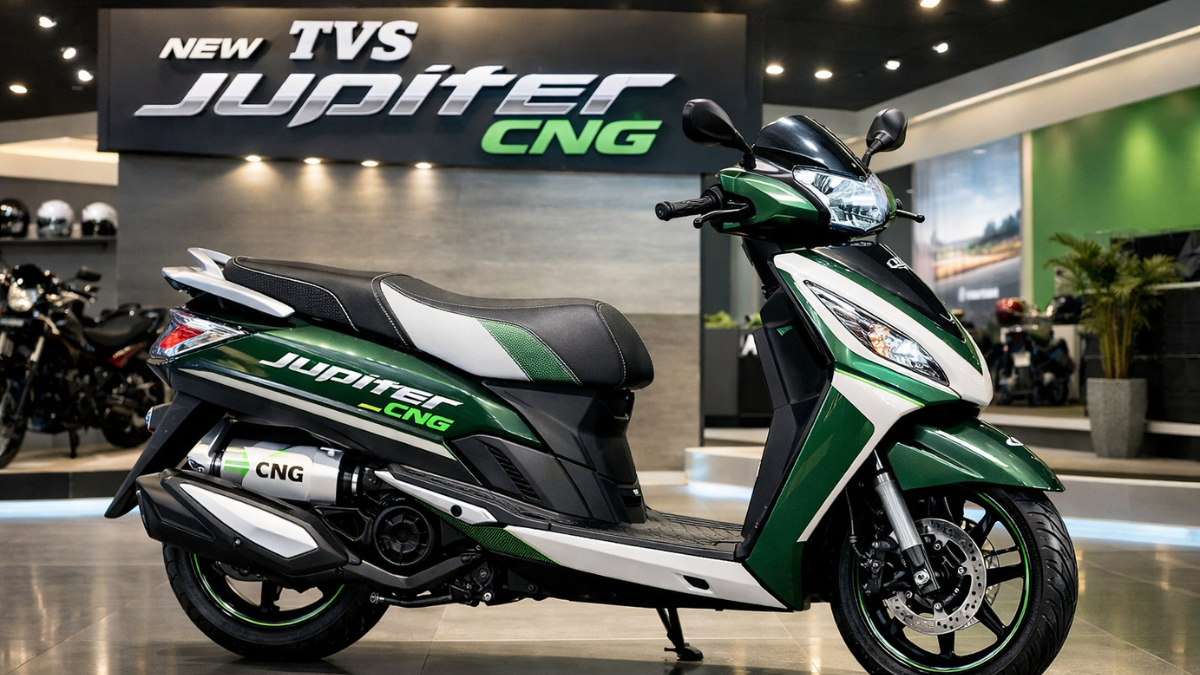

Meet the TVS Jupiter CNG 2026, the first CNG-powered scooter from a mainstream Indian manufacturer. No, it’s not electric. It’s not hybrid either. It’s dual-fuel: CNG and petrol. And it might just shake up the way India commutes.
CNG on Two Wheels? Yes, Really.
It almost sounds like an experiment—bolting a CNG kit into a family scooter. But it’s not just an aftermarket mod this time. The Jupiter CNG 2026 comes factory-fitted with dual-fuel capability, giving riders the freedom to switch between compressed natural gas (CNG) and traditional petrol on the fly.
Why does that matter? Let’s talk numbers. As of late 2025, CNG costs about ₹75/kg, while petrol hovers between ₹105–₹120/liter depending on the city. The difference adds up fast—especially if you’re riding 30–40 km a day. With a claimed 82 km/kg mileage on CNG, this scooter brings genuine monthly savings to the table.
No More Range Anxiety
A lot of folks are hesitant about CNG two-wheelers because of one big reason: What if I run out and there’s no pump nearby? Fair concern. But this is where the Jupiter CNG’s dual-fuel setup shines.
Run out of CNG? Switch to petrol and keep going. You don’t need to plan your routes like a chess match or wait in endless CNG queues if you’re in a crunch. This kind of flexibility is what sets the Jupiter apart from pure electric or even some petrol-only scooters.
Mileage that Actually Makes You Smile
Let’s crunch the math real quick.
- CNG mode mileage: ~82 km/kg
- Petrol mode mileage: ~50–55 km/l (expected)
Now consider daily riders doing ~25–40 km/day. That could translate into monthly fuel savings of ₹800–₹1,200, depending on how much CNG is available in your area.

In a country where riders often choose bikes based on kitna deti hai, this figure is nothing short of game-changing.
| Fuel Type | Approx. Mileage | Fuel Cost (avg.) | Cost per Km |
|---|---|---|---|
| CNG | 82 km/kg | ₹75/kg | ₹0.91/km |
| Petrol | 52 km/l | ₹110/l | ₹2.11/km |
Note: Actual figures vary based on traffic, load, and terrain.
The Jupiter Touch: Comfort First
Thankfully, the shift to CNG doesn’t come at the cost of comfort. TVS has made sure the Jupiter CNG keeps the same suspension tuning, long seat, and upright rider posture that the standard Jupiter is known for. No weird riding angles. No extra bulk making it top-heavy.
The CNG tank is neatly integrated under the seat, and according to TVS engineers, the weight distribution remains well-balanced—even when both tanks are full. So, whether you’re riding solo or with a pillion, stability won’t be a concern.
Engine Tweaks for Twin-Fuel Use
While TVS hasn’t yet revealed exact displacement or power figures, insiders suggest the engine will be based on the tried-and-tested 110cc Jupiter platform, but with updated fuel management systems to support the dual-fuel setup.
In terms of power, don’t expect a rocket. But that’s not what this scooter is about. What you get instead is:

- Linear power delivery
- Minimal vibrations
- Smooth gear-free throttle response
Perfect for weaving through traffic and making daily office or errand runs fuss-free.
Keeps It Stylish, Subtly
One of the smartest decisions TVS made? Not messing with the Jupiter’s design DNA. The CNG version looks just like the petrol one, with maybe a slightly revised badge or color option. No bulging tanks. No awkward cylinders sticking out. You’d barely know it runs on CNG unless someone told you.
This means it still appeals to the family audience—the moms, dads, and college students who want a smart, clean-looking scooter that doesn’t scream “experimental”.
Practical Features You’ll Actually Use
Expect TVS to keep things feature-focused but not flashy:
- External fuel lid for petrol tank
- Clear, semi-digital instrument cluster
- Synchronized braking system (SBS)
- Mobile charging port
- LED DRLs (likely)
- Under-seat storage (a bit smaller due to the CNG cylinder, but still usable)
It’s built for convenience, not gimmicks. And that’s a good thing.
Price Tag: A Little More Upfront, A Lot Less Over Time
Pricing hasn’t been officially announced yet, but estimates place the Jupiter CNG at around ₹90,000–₹95,000 (ex-showroom). That’s ₹6,000–₹8,000 more than the standard petrol model.

Yes, it’s a slight premium. But with the fuel savings you’ll rack up in just 8–10 months, the cost pays itself off. And with TVS’s widespread service network, you won’t be stranded looking for parts or trained mechanics either.
Good for the Planet Too
One often-overlooked bonus of CNG? Lower emissions.
- Less carbon monoxide
- Lower unburned hydrocarbons
- Significantly reduced particulate matter
For eco-conscious buyers who aren’t ready for an EV (thanks to price or range limits), CNG offers a middle path—cleaner than petrol, cheaper than diesel, and easier to adapt than electric.
A Real-World, Real-India Solution
The TVS Jupiter CNG 2026 isn’t trying to win drag races or trend on Instagram. It’s built for the everyday Indian who wants a practical ride that saves money, runs smoothly, and doesn’t give them grief.
Whether you’re a delivery rider, a salaried office worker, or a parent ferrying kids to school, this scooter ticks the boxes that actually matter. It’s not trying to be sexy—it’s trying to be sensible. And in today’s economy, that’s a statement in itself.
FAQs
TVS claims up to 82 km/kg on CNG and around 50–55 km/l on petrol, depending on riding conditions.

Yes, the Jupiter CNG is a dual-fuel vehicle. You can switch between fuels manually based on availability.
Under-seat storage may be slightly reduced due to the CNG tank, but it still fits daily essentials.
The factory-fitted CNG kit is tested for safety and emissions compliance, with proper shielding and crash protection in place.
TVS is expected to officially launch the scooter in Q1 of 2026, starting with metro cities where CNG availability is robust.
