
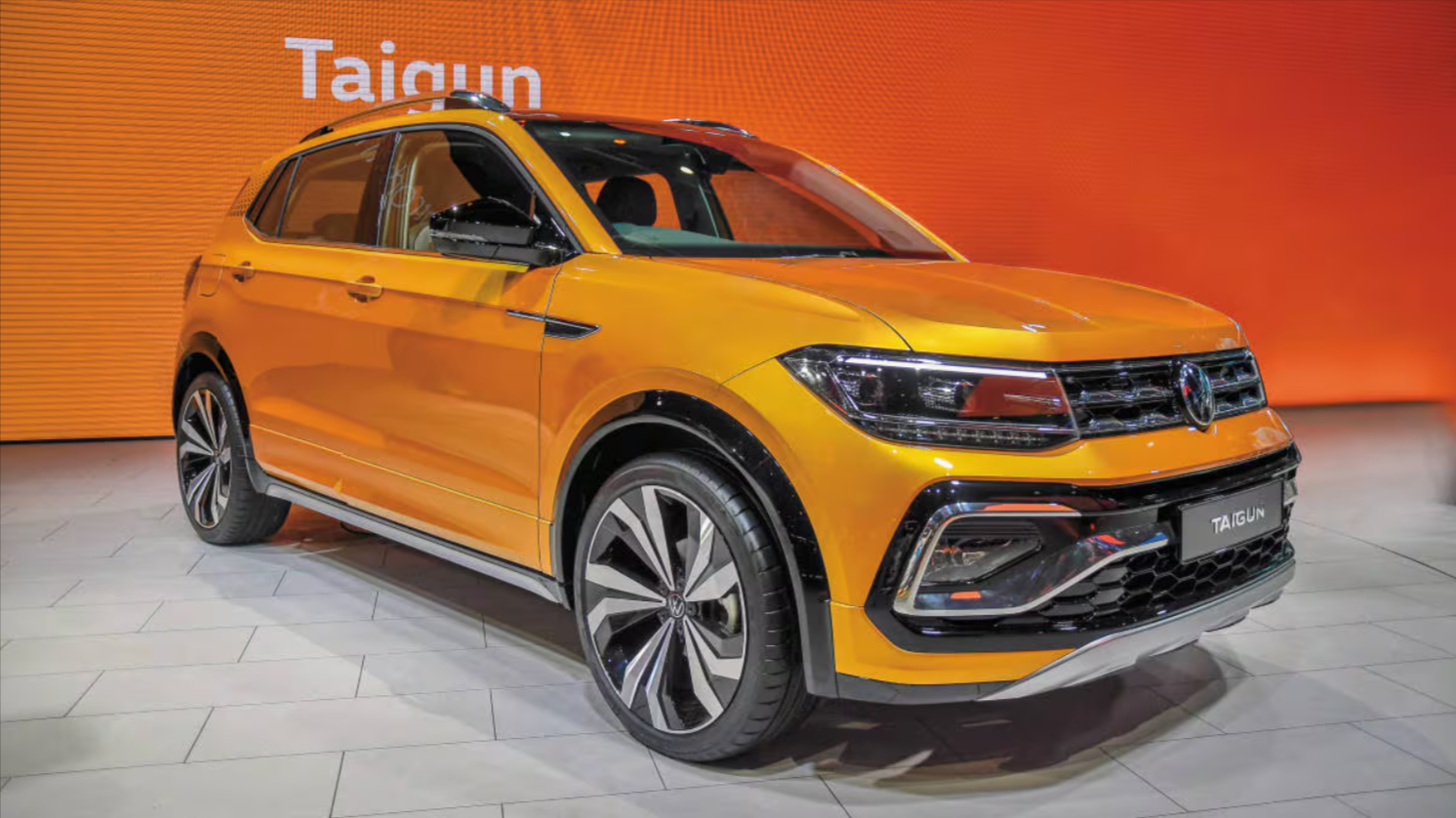

The compact-SUV space in India has been buzzing for years, but every now and then a model slips into the crowd with that quiet, almost stubborn confidence that forces you to take a second look. Volkswagen’s Taigun is exactly that kind of machine. It doesn’t scream for attention; instead, it carries the understated swagger of a car that knows its job and does it well whether you’re weaving through weekday chaos or stretching its legs on the Jaipur highway on a late Sunday run.
Design: A Clean Cut in a Loud Segment
If you’ve ever stopped at a traffic light and glanced over at a Taigun, you know it doesn’t need wild chrome or oversized panels to make its point. The thing has presence. The wide grille and crisp LED DRLs sit neatly on a face that feels distinctly Volkswagen—structured, calm, almost German in its discipline.
The proportions are tight, which is a blessing in cities where a millimeter decides whether you squeeze into a parking spot or circle the block twice. Those 16–17-inch alloys lend enough SUV attitude without trying to look like a mini-Fortuner. And yes, it’s premium, but not the kind that feels like it’s trying to impress a wedding procession.
Cabin: Practical, Honest, and Surprisingly Upmarket
Slip inside and the first thing you notice is how uncluttered the layout feels. Volkswagen hasn’t thrown tech at you just to tick boxes. Everything is right where you expect it.
There’s decent shoulder and leg space for four adults, though squeezing in a fifth for a longer haul might spark a few complaints. Materials feel sturdy—not soft-touch everywhere, but definitely the sort that ages well. Those who’ve owned older VWs know exactly what I mean.

Tech-wise, the essentials are all here: a responsive touchscreen, wired/wireless Android Auto and Apple CarPlay, automatic climate control, USB-C ports sprinkled where you need them, powered ORVMs, and keyless entry. Nothing over-the-top, nothing missing.
Engines: Two Petrol Motors, No Drama
Volkswagen has gone all-in on petrol for this lineup. But the pair of TSI engines is more than enough for what most buyers want today: efficiency without feeling sleepy.
Engine Options at a Glance
| Engine Variant | Displacement | Transmission | Power Output |
|---|---|---|---|
| 1.0L TSI | 999cc | Manual / AT | 115 PS |
| 1.5L TSI EVO | 1498cc | Manual / DSG | 150 PS |
The 1.0L is a sweet little unit—zippy in traffic, light on the pocket, and surprisingly refined on the open road. For everyday commuters, it’s honestly all you need.
But if you want a bit of punch, the 1.5L feels like it went to the gym over the weekend. Its Active Cylinder Technology (the same concept explained via the Ministry of Road Transport’s efficiency guidelines on morth.nic.in) switches off two cylinders under low load, quietly saving fuel without making you feel like the car is dozing off. The DSG box on this variant, as usual, is crisp—occasionally dramatic in bumper-to-bumper traffic, but brilliant once the road clears.

Mileage: Strong Numbers for a Turbo Petrol
Turbo engines aren’t always saints at the fuel pump, but the Taigun holds its ground with respectable ARAI figures.
| Variant | Fuel Type | Mileage (ARAI) |
|---|---|---|
| 1.0L TSI MT | Petrol | ~19.20 km/l |
| 1.0L TSI AT | Petrol | ~17.23 km/l |
| 1.5L TSI DSG | Petrol | ~18.47 km/l |
Real-world numbers will depend heavily on how you treat the throttle. If you drive with a light foot—coasting, smooth shifts, avoiding aggressive overtakes—you can stay within shouting distance of these figures. For clarity, ARAI’s official methodology is available under the testing standards on araiindia.com, where fuel-efficiency cycles are outlined.
Safety: Volkswagen’s Ace Card
With all the noise around safety standards in India, Volkswagen’s long-standing reputation for structural integrity has suddenly become more relevant. The Taigun benefits from the same global approach to crash engineering, and it shows.
You get:

- Dual front and side airbags
- ABS with EBD
- Electronic Stability Control (ESC)
- Rear parking sensors plus camera
- Hill-hold control
- A stronger-than-average body shell
The Taigun scored impressively under the updated Bharat NCAP protocols (details available at bharatncap.gov.in), giving families that extra nudge of reassurance—especially if you regularly drive on unpredictable roads or highways that tend to surprise you with sudden cattle crossings.
Value: Why the Taigun Actually Makes Sense
In a segment dominated by feature-loaded Korean rivals, the Taigun plays a different game. It’s not the car that wins a spec-sheet war. It’s the one that feels better built, drives better, ages better, and keeps a sense of identity in a space drifting toward sameness.
Here’s where it hits the sweet spot:
- Stylish but not flashy
- Easy to maneuver in crowded cities
- Solid, refined petrol engines
- Well-balanced ride and handling
- Volkswagen’s sturdy build quality
- Clean infotainment and usable tech
Against the Hyundai Creta, Kia Seltos, and even its cousin Skoda Kushaq, the Taigun often appeals to buyers who want engineering over excess. It’s that slightly understated guy at the party who doesn’t dance, doesn’t make noise, but somehow everyone remembers him.

Verdict
If you’re upgrading from a hatchback, starting a small family, or simply want a compact SUV that doesn’t feel cheaply assembled, the Taigun hits the brief. It blends urban practicality with highway confidence, keeps maintenance reasonable, and offers enough personality to stand out without shouting.
For anyone who prefers quality over gimmicks, this SUV is worth a long, honest test drive.
